Engaged journalism Insight
“Newyddion i Bawb” – Week Note 3
Created on: January 22, 2026
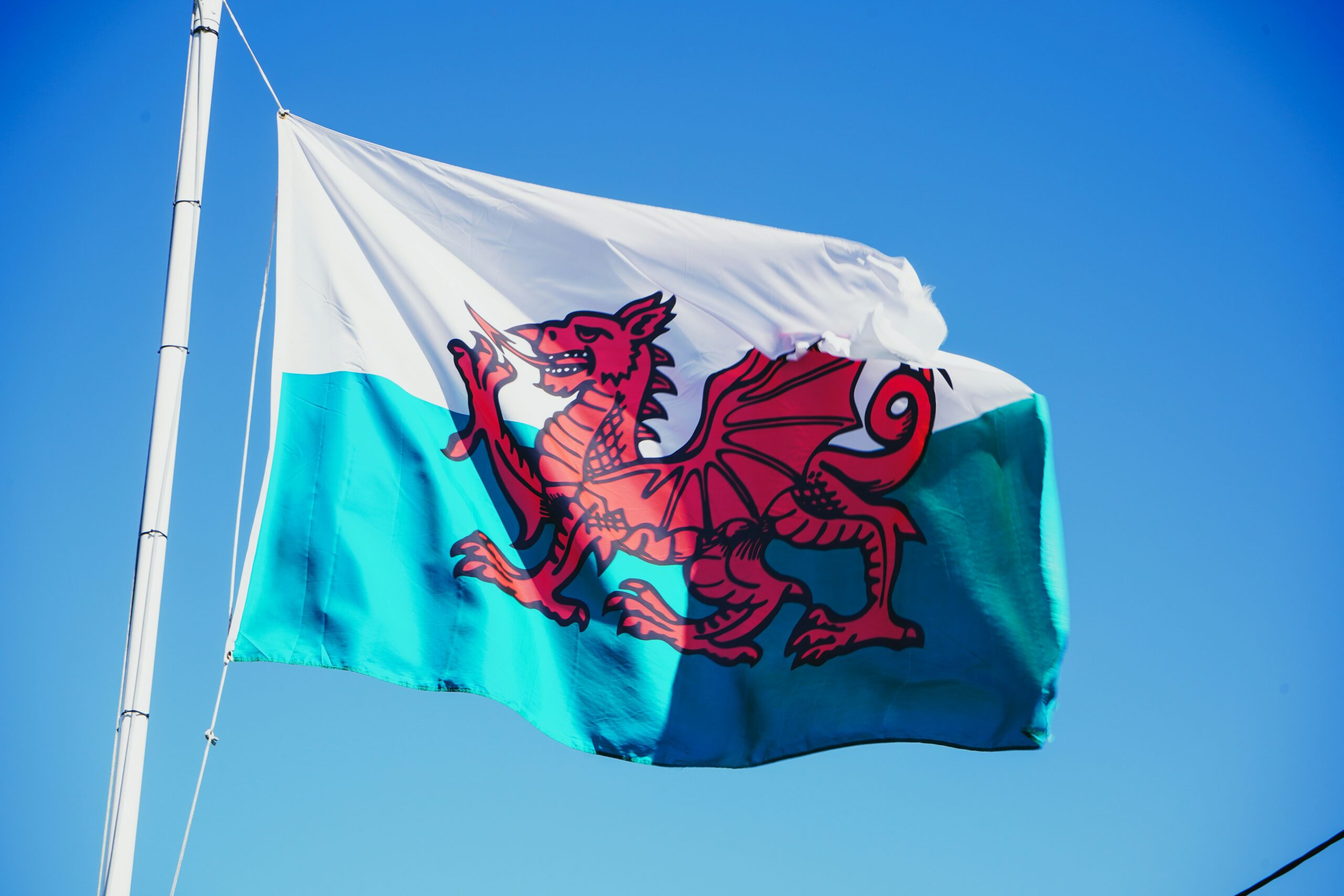
Ydw i’n ddigon Cymraeg?
Ydw i’n ddigon Cymraeg? Am I Welsh enough? I talked about this a little bit in my last week note, but I wanted to expand on it, because it feels increasingly important.
For many reasons, I’m forced to ask myself this question a lot. I’ve always felt deeply, viscerally Welsh. I grew up here, it’s a central part of my identity and although I lived in England for more than 30 years, I always wanted to come back.
But the problem isn’t me. Sadly, like many people of colour (as well as immigrants and marginalised people of all kinds), public discourse (more often than not, sparked and fanned by media narratives) often tells me that I’m ddim yn ddigon Cymraeg – not Welsh enough.
By coincidence, the complexity of Wales and Welshness was what we explored in “Cymru and I”, Inclusive Journalism Cymru’s collection of essays by marginalised writers in/from Wales.
Of course, the language is an important part of how we define ourselves and it plays a central – albeit tense and often conflicted – role in our personal and national identities.
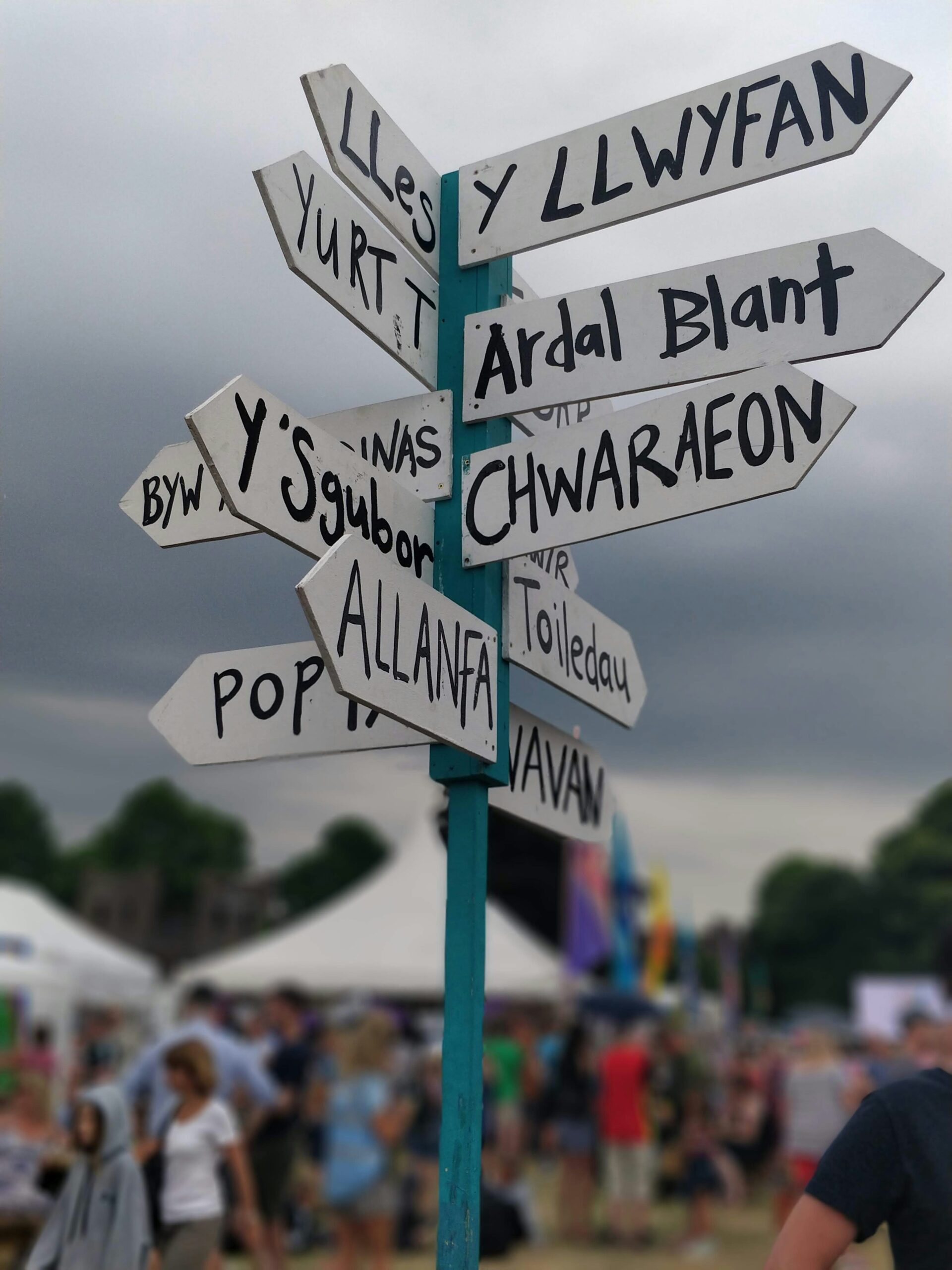
For all those reasons, we felt it was important to kick off our first Newyddion i Bawb research weekend with a discussion of Cymraeg, the language. In a practical sense, it came from an acknowledgement that not all of our facilitation team or our community co-researchers are Welsh speakers, but we still want to reflect the importance of the language.
To give a brief and partial sense of the context, everyday use of Welsh isn’t evenly spread. In much of North Wales, Welsh is often the default language of community life, whereas in large parts of South Wales, English will dominate daily conversation, with Welsh only appearing in specific or formal contexts.
Blaenau Ffestiniog feels different. Around 75-80% of people are Welsh speakers, compared to just under 20% across Wales in general. It’s practical and social, and deeply local. It carries humour, history, and a sense of belonging that’s immediately obvious, even if you’re not from the town.
That’s what we wanted to better understand and reflect, and to do that – rather than imposing a view, saying “this is how we’re going to do things” – we tried to create a space in which our group could themselves explore how they wanted Cymraeg to fit into our work.
What particularly struck me about the conversations (which were beautifully facilitated by my Inclusive Journalism Cymru colleague Silvia), was that a lot of the feelings and language mirrored the feelings and language used by immigrants. Even people who’ve always lived in Wales and are fluent Welsh speakers often feel like they don’t belong or that they’re not accepted. There’s clearly something important to reflect on in that.
Although this research is obviously a professional journey, doing work like this is always a personal exploration too. For me, the different sense of connection with the language that I’ve felt from working in Blaenau Ffestiniog has reinvigorated my own Welsh learning journey too. Although I’d been doing Welsh on Duolingo for some time, it wasn’t really helping me speak Welsh day to day. For that reason, over Christmas I gave up my 2000+ day streak (a trivial, but simultaneously and weirdly non-trivial, decision!) and moved over permanently to Say Something in Welsh. I now do at least 30 minutes a day of Welsh learning, and have also joined a two hour a week in-person class. It’s now absolutely my intention to become fluent.
A number of conversations this week have reminded me that doing the work we do has profound personal impacts. I’m a different (and better) person because of the community led work that I’ve done over the last five or years. It’s never well-paid, or even really well-understood, but those personal impacts feel increasingly priceless.

Blaenau Ffestiniog and the Foundational Economy
Over the holidays, I started thinking deeply about how journalsm (or at least collective, democratic, place-based sense-making), should be thought of as part of the Foundational Economy , as introduced in my previous week note.
That framing came from giving myself the space to just think. That time allowed all the conversations and insights of the previous few months to percolate and consolidate, but I think it’s important to emphasise that the foundational economy thinking is very clearly endogenous rather than exogenous – that’s to say that it’s bubbled up from within the community, rather than me “imposing” it from outside.
In a way it was inevitable, because Blaenau Ffestiniog is all foundational economy. At one level that’s because, as outlined in the Manifesto for the Foundational Economy, “the foundational is all that is left in the declining old areas of heavy industry all across northern Europe”. However, there are also reasons to think of the foundational economy more positively – as a set of activities through which communities come together to collectively ensure that they have high quality, sustainable services that enable them to live as well as possible.
In Blaenau Ffestiniog, the work of Cwmni Bro Ffestiniog illustrates this in practice, coordinating community-owned and mission-driven organisations to sustain essential cultural, social, and economic infrastructure in a challenging post-industrial context. Many of our community co-researchers work with, or alongside, Cwmni Bro and so – although we didn’t come into the work with a foundational economy approach – it’s natural that their thinking and input has been influenced by what’s all around them. In a sense it’s the tangible and practical expression of what’s “in the air” and that’s always made Blaenau Ffestiniog feel such a unique and special place to me.
For that reason, my aim now is to work as closely as possible with Cwmni Bro in order to hopefully help support the building of a sustainable sense-making infrastructure that might even be a prototype for one way that foundational media might work. The risk with so many temporarily funded projects is that there is a spike of activity which creates positive benefits and insights, but that these end up withering on the vine when the project ends. I want to find a way for my AHRC Community Innovation Practitioner Award to catalyse something bigger by supporting (with that temporary money, resource and profile) the things which are already working in the town.
Raymond Williams
But there’s something else “in the air” in Wales that makes this framing feel endogenous, and that’s the thinking of Raymond Williams.
For me, Williams was one of the most influential cultural thinkers of the 20th century. His perspective was deeply shaped by Welsh working-class life, rural communities, and the social changes brought by industrialisation and modernity. His key arguments reflect the way we’re trying to do our work, because he constantly challenged the idea that “culture” belongs only to elites, arguing instead that it’s rooted in everyday life, language, and collective experience. His particularly Welsh context – community, labour, bilingualism, and political struggle – runs through all his thinking on media, democracy, social justice, and the importance of reflection on whose voices are heard in society.
In my (re)-reading of Williams, it feels clear that he was essentially making the same argument as we are now – that community sense-making should be thought of as an essential service, and that it should be controlled by communities, rather than distant media barons whose interests diverge (often violently) from the interests of many (most?) people and communities.
In many ways that seems so obvious as to be banal. How can we possibly decide how we want our health, transport and energy systems to operate if we don’t have the information to make those choices? However, despite being so self-evident, it’s not an argument that’s widely accepted or even, frankly, considered at a practical or policy level. Perhaps it’s time for that to change.
Community Connection
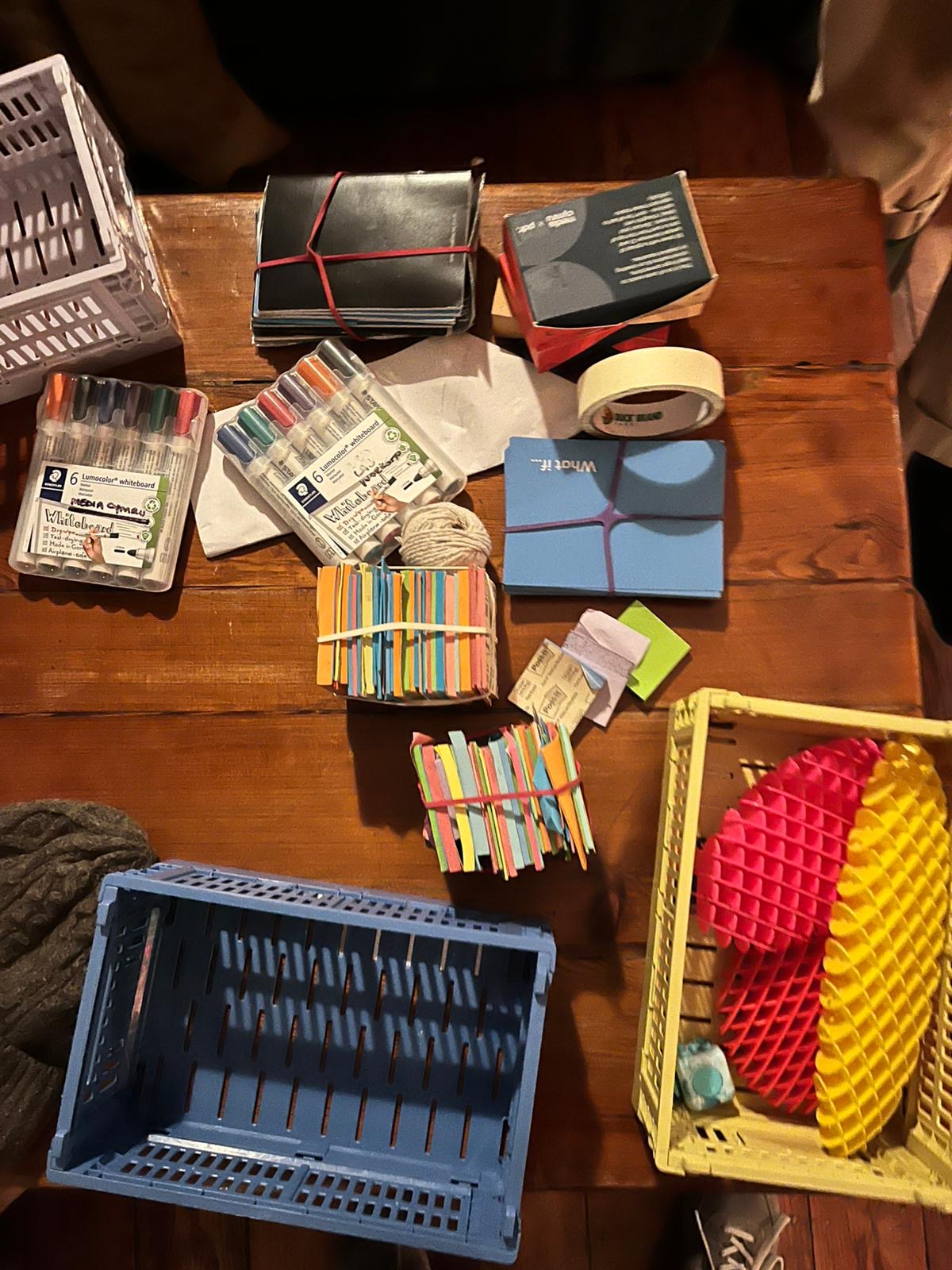
Clearly one way for that change to be enacted is simply for communities to lead and deliver their own sense-making. We used Design Justice methodologies with our News for All Work in Cardiff, explicitly so that the community was leading the research there, rather than simply being a subject of it.
In Blaenau Ffestiniog, we’re doing that by putting the design and delivery of two “Community Connection” events in the hands of our community co-researchers. There will be more on the shape of those events in future notes, but I guess the key thing to highlight here is that it would be too easy to think of this as “my” project – where I’m making the key decisions and creative choices.
I’ll be honest, three or four years ago, that’s exactly how I would have done the work, but I’m glad to say that I’m now a recovering control freak. For various reasons, I used to find it very difficult to relinquish control – largely because I thought nobody else would do things “properly”.
Largely thanks to Silvia and Damian, our brilliant team at Inclusive Journalism Cymru, I now know that to be completely untrue. The best things that happen at Inclusive Journalism Cymru are the things I know least about. Very often, an event or activity will pop up on our socials that seems to have just “magically” appeared, and those are the things that make me the proudest, because of course they didn’t just happen magically. They’re the result of lots of hard work, thought and care – it’s just that none of those had to come from me, and very often (maybe always) they’re better for that.
That’s exactly what’s happening with our community connection events – Kiki, Wil and Pip (our little events sub-committee) know their community and context far better than me, so of course their views on what the events should look like and who should be involved is far better than mine. That’s why, of course, they should be leading the work.
I have my friend and colleague Rhiannon White (Founder and Co – Artistic Director of Common/Wealth – a site specific political theatre company) to thank for a large part of my “recovery”. We’ve worked together on News for All and Newyddion i Bawb and I’ve learnt so much from her over the last 3 years. I’ve always thought Common/Wealth were the very best, and in this last week that was made official, when they won the Community category at The Stage Awards.
I did an interview with Rhiannon for the Community Innovation Practitioner Podcast (that will be one of the outputs of the programme) this week, and it was a lovely opportunity to reflect on how and why we both do the work we do. It also reminded me that, whilst it seems obvious to us, lots of people think that the way we do research is completely mad.
Most journalists and academics would think that the way we simultaneously insert ourselves into the work and remove ourselves from it destroys any notion of objectivity. I guess to them I’d say:
That’s. The. Point.
Created on: January 22, 2026
Has this sparked ideas for you?
Do get in touch if you want to pick up on any of these thoughts.
contact