Engaged journalism Insight
“Newyddion i Bawb” – Week Note 4
Created on: January 26, 2026
There’s nowhere to buy underwear!
I’ve just returned from our second Newyddion i Bawb Research Weekend in Blaenau Ffestiniog with the striking insight that the town is completely knickerless. For those of you who’ve been following our evolving thinking about sensemaking as part of the foundational economy, what could be more foundational?!
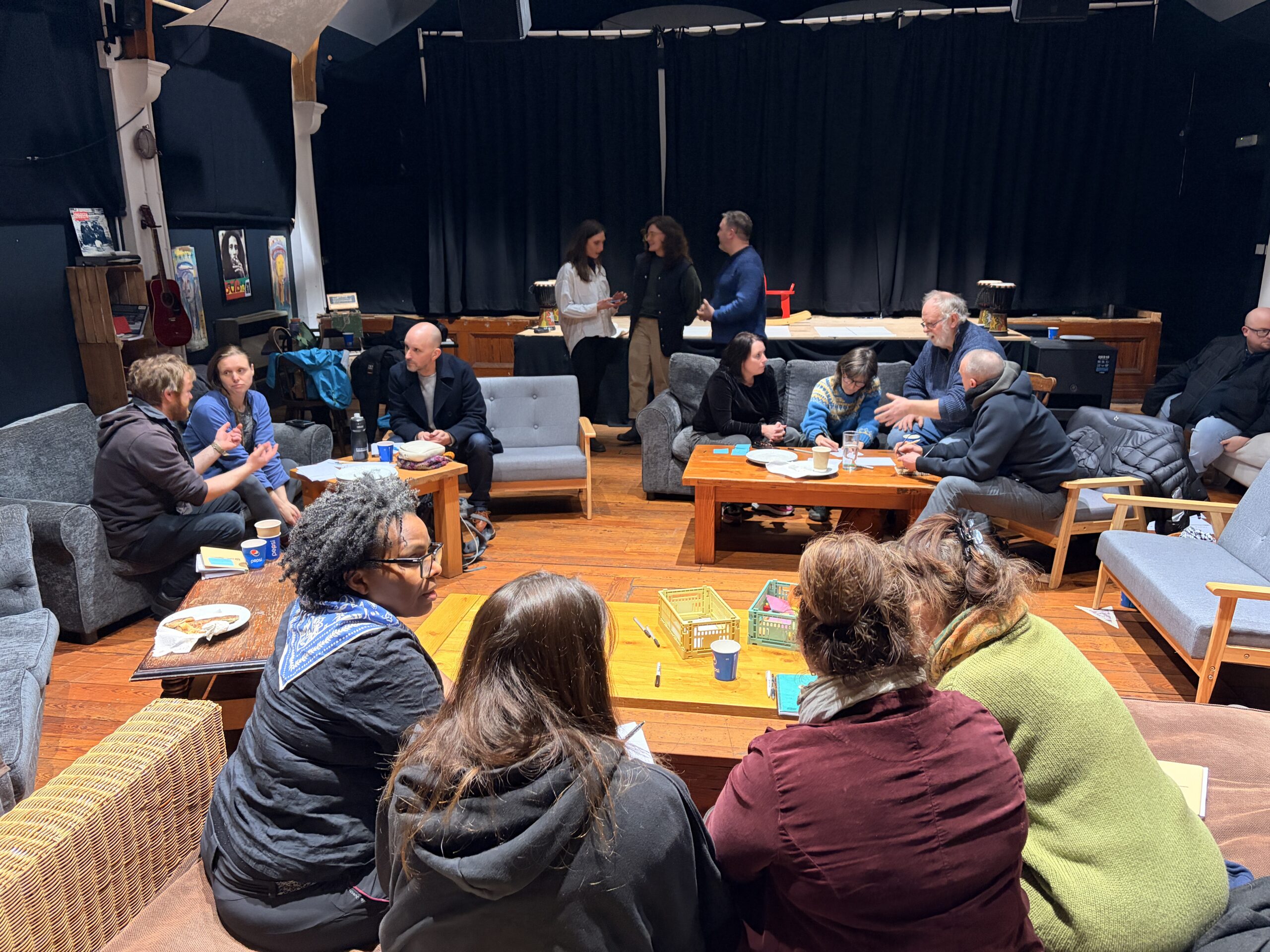
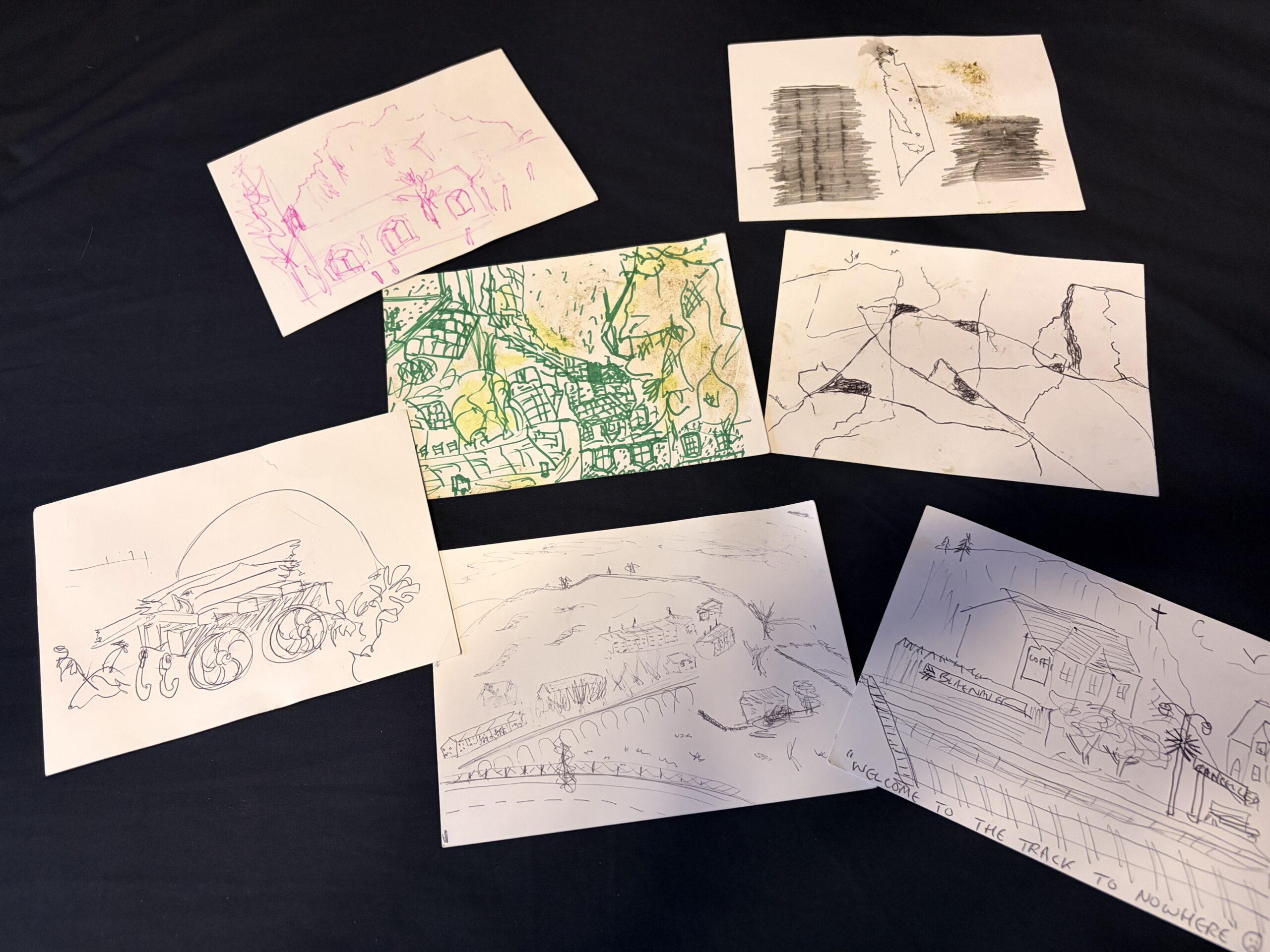
How did we discover this? Well, we sent our community co-researchers out in the wind and rain to draw a new or unexpected view of their town and then to ask someone they didn’t know “What does Blaenau need?”.
We now know that it desperately needs somewhere to buy underwear, not just because one person told us, but because multiple respondents highlighted it.
It’s such a striking reflection because it’s obviously a deeply felt and acknowledged need, it’s so obviously fundamental, and it came from asking a very simple question.
But this exercise brought up so much more. Without getting into too much detail, one of our group recounted what someone had told him and then, almost immediately, felt deeply conflicted and concerned that he might have misheard and/or misrepresented them. We realised, as a group, that we’d unwittingly mirrored how most traditional journalism is done – through a one to one interaction where the “reporter” had all the power of mediation and publishing.
As the group then discussed, when this is fed through a system of confected “objectivity” to spit out something that claims to be “the truth”, the potential for distortion, sensationalisation (and ultimately harm) is baked in. These impacts are part of the system, rather than being mitigated for.
What this highlighted for us was that the argument that’s coming from our group, in a number of different ways, is that we need a reconfiguration of the basic structures of journalism (or at least sense-making) away from one-to-many and towards many-to-many. In a system of collective listening and processing, mishearing or misrepresentation become almost impossible.
This aligns with a number of things that I’ve been thinking and doing recently. Firstly (thanks to my colleague Enrique Uribe Jongbloed for the tip) it aligns with the thinking of Jesús Martín-Barbero – particularly the notion of “From the Media to the Mediations”.
In summary (and in many ways similarly to Raymond Williams) what Martín-Barbero articulated was that the crucial democratic question is not what the media say, but how meaning is produced, circulated and taken up within everyday life.
For Martín-Barbero, mediations include:
- Social memory
- Place
- Class and generation
- Institutions and informal networks
- Rituals, habits and local knowledge
These seem to map perfectly onto where our work has been and is leading:
- Deep listening
- Community Connection events
- Collective sense-making
This matters for devolution – one of the key concerns of the AHRC Community Innovation Practitioner Award programme that this work is part of – because:
- Power is exercised culturally before it is exercised administratively
- Local democracy fails when everyday mediations are bypassed
- Centralised media flatten place into representation
And I guess further legitimises our focus on:
- Relational work
- Slow processes
- Non-institutional spaces
- Collective interpretation as opposed to content production
Side-note: I hugely value the fact that Enrique (a Colombian researcher) was able to recommend Martín-Barbero (a Spanish-Colombian thinker) to me, because we have distinct but shared perspectives which come from a “Global South”, postcolonial context. As explored elsewhere, our area of research is still dominated by North American (particularly US) and European (particularly UK) voices. It’s pure luck that we happen to work together (and Enrique is so generous) but it’s sad that so many of the shifts happening in UK and global culture are making the sharing of knowledge and experience like this even more difficult.
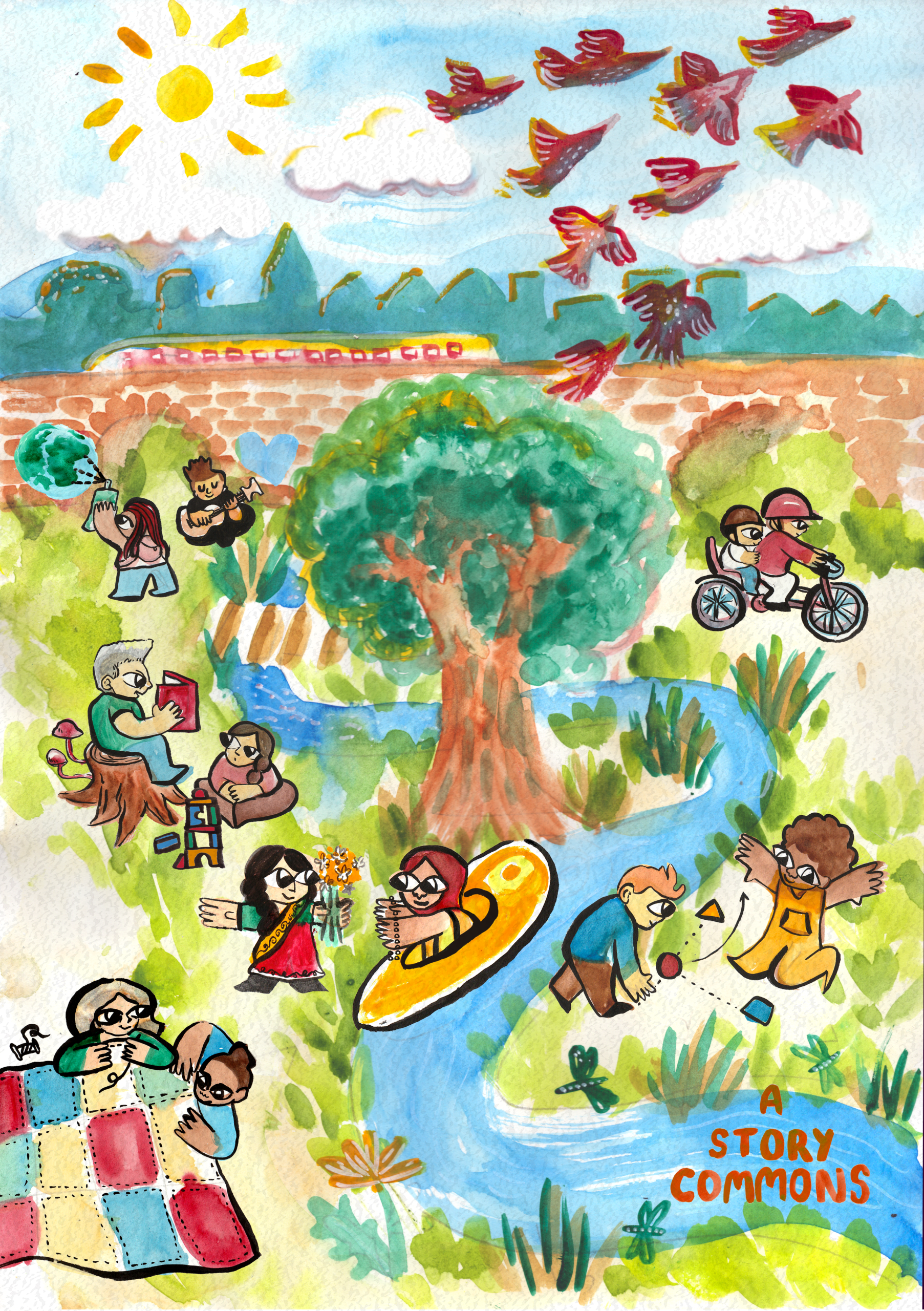
Secondly, with my People’s Newsroom hat on, we’ve this week published a series of Lessons for a Story Commons built from work with storytellers and organisers from across the UK. You can dig into the details via the link, but in short, the lessons are that:
Generative and life-giving stories will only come from generative and life-giving practices. That’s why we think this transformation needs to be much deeper than just having more diverse newsrooms, more funding for local journalism, or more fact-checking on TikTok.
Instead, we need processes for sharing stories that are highly collective, democratic and accountable, supporting communities to imagine and build towards transformed futures. Put together, we call these types of practices ‘a story commons’:
- In a story commons, we value the process
- In a story commons, we explore what was, what is and what could be
- In a story commons, we collaborate to regenerate
- In a story commons, we envision new economies
- In a story commons, we reimagine accountability and care
- In a story commons, we inspire creativity
It’s obvious (and understandable) that there is huge overlap between the ideas we’re exploring with The People’s Newsroom and Newyddion i Bawb, and that they both represent a realignment and reimagination of the structures through which we make sense of the world.
One perfect example flows between that final lesson – “In a story commons, we inspire creativity” and the work we’re doing in Blaenau Ffestiniog.
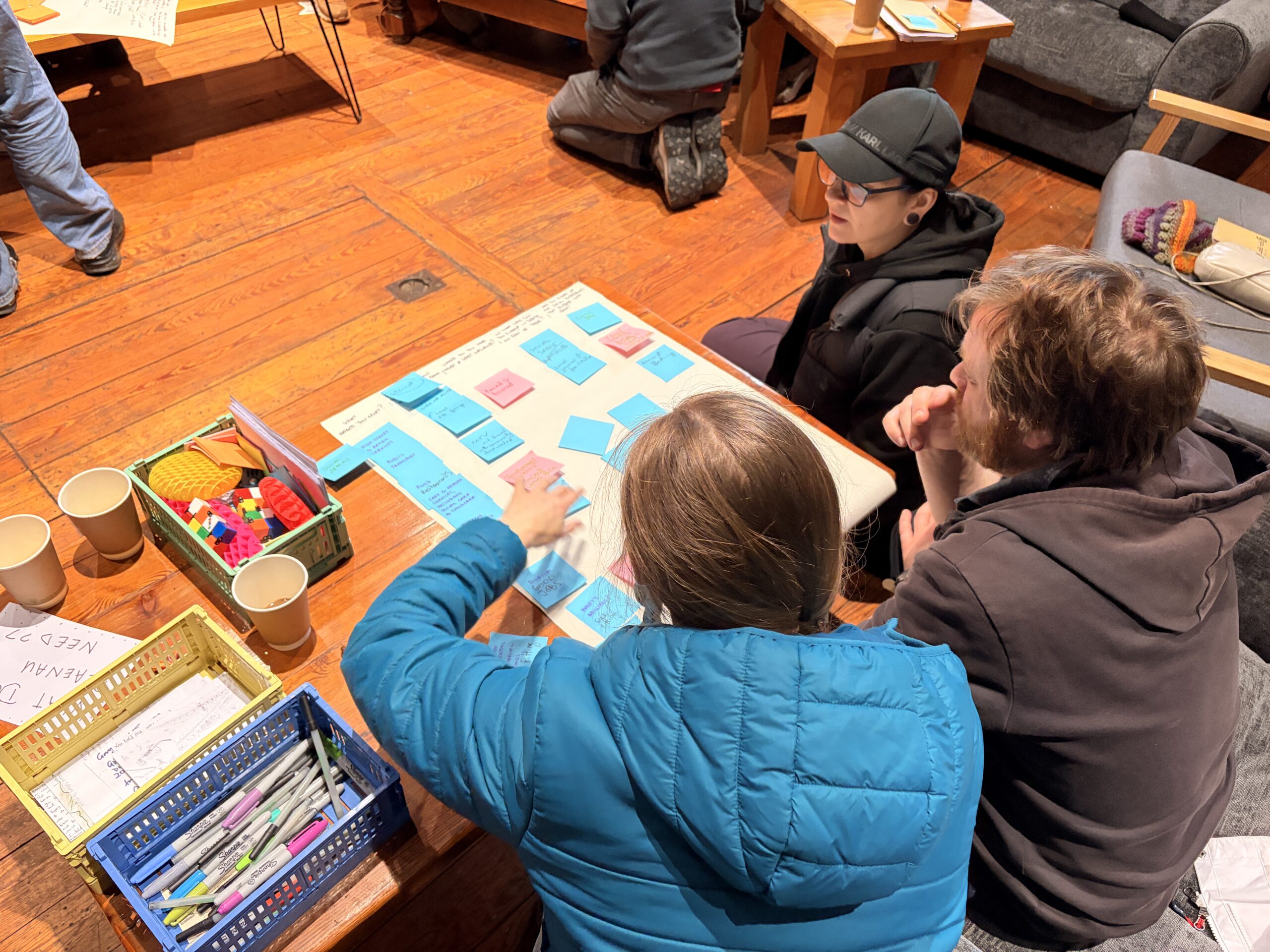
Last Friday night (full with pizza) we all wrote our own free-written poems from the perspective of our place. Our writing started, “I am Blaenau Ffestiniog”, or “I am Tanygrisiau”, “I am Caernarfon” or whatever – but it was incredibly moving both how beautiful (and high quality) the work was, and how there was such a diversity of styles, approaches and perspectives on show.
Culture and art are constantly fighting not to be devalued, forced to constantly wrap themselves in “economic benefit”. But culture is more than that, and being in that room on Friday reminded me that culture is ours, culture is everywhere, and culture is priceless.
And if this weekend has reminded me, culture is also how we best make sense of the world. I often reflect on how, as journalists, therapists, poets, theatre-makers…we’re all doing the same job, understanding and reflecting the human experience. Through simple human connection we can find better ways through.
As one of our group said, very straightforwardly, after a rich and reflective conversation inspired by our poetry, “we don’t necessarily need ‘journalism’ – because this is it”.
Created on: January 26, 2026
Has this sparked ideas for you?
Do get in touch if you want to pick up on any of these thoughts.
contact