Engaged journalism Insight
Journalism’s Logical Fallacy
Created on: June 16, 2026
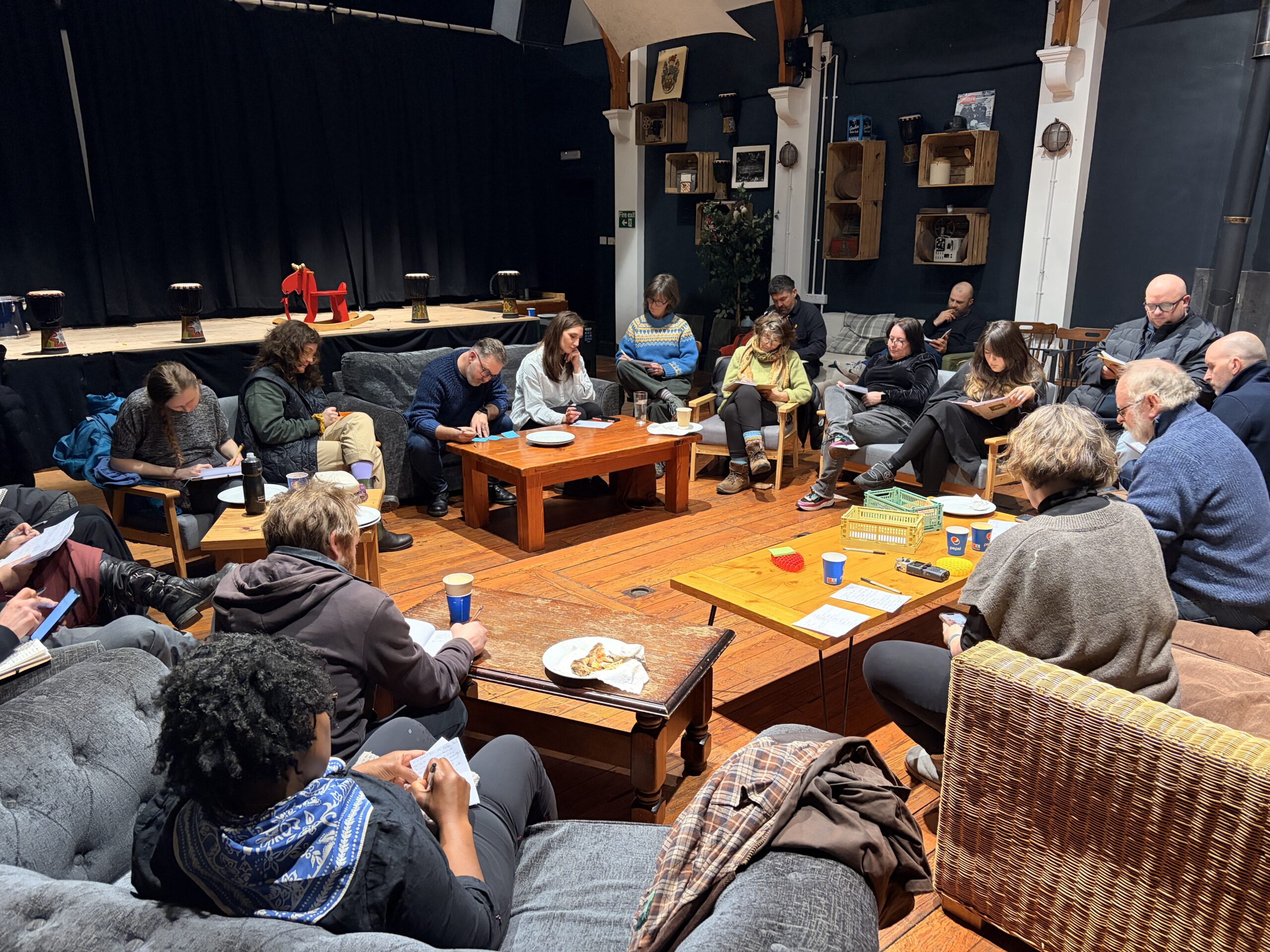
Two things about me might come as a surprise to you, if you’ve perhaps seen or read about the deep listening work I’ve been doing with communities over the last four or five years.
Firstly, I’ve done a lot of research on AI in journalism. I was a coach on Polis’s Journalism AI Collab Challenge five years ago, alongside friend and colleague David Caswell. That led to a series of prototypes and user testing of modular journalism – what some people are dubbing liquid content, which is having a moment just now.
Secondly, I have a degree in philosophy (alongside politics and economics). Perhaps that’s less of a surprise if you’ve had the misfortune of catching me at the end of the night at a conference somewhere!
There are a couple of things to note about those two seemingly disparate facts. Firstly, it shouldn’t necessarily be a shock that you can be interested in understanding what people and communities want and need from journalism and exploring the best ways to get it to them. They aren’t and shouldn’t be thought of as binary opposites.
Secondly, philosophy and computer science are intrinsically linked. They share a common foundational building block – the discipline of formal logic. It’s the systematic study of reasoning and argumentation, which provides the rules and structures to determine whether a conclusion genuinely follows from a set of premises.
I’ve been thinking about this a lot lately, because I’m struck over and over again by how many arguments about the future of journalism are logically unsound. Either the premises are factually incorrect, meaning the conclusion can never be true – or the premises are true, but the conclusion simply doesn’t follow from those premises.
In philosophy, we have a term for this: a logical fallacy. And right now, journalism is full of them.
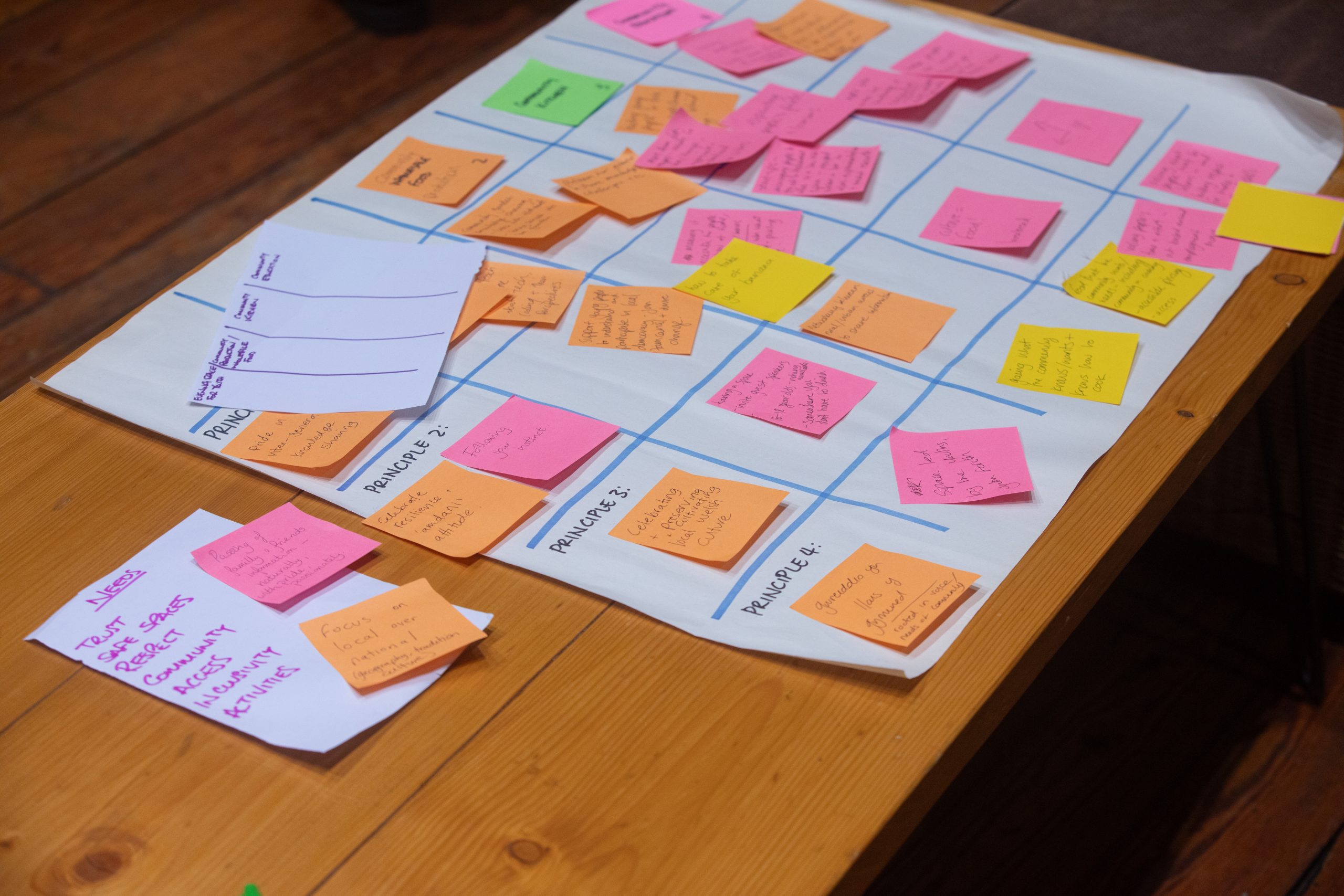
So let’s test the arguments the industry is making.
The established wisdom goes something like this:
Journalism is in crisis > AI is accelerating the disruption > therefore we need to find ways to save journalism
The conclusion – more technology, better business models, new distribution platforms – follows logically enough from that premise. The problem is that the premise itself is wrong. Or rather, it’s incomplete in a way that makes everything that follows from it unsound.
The missing question that very few people are asking is perhaps the only thing we should be thinking about: what do people and communities actually need from us?
Without that, the whole argument collapses. You can’t logically conclude what journalism should become if you haven’t established what it’s for. This is about re-establishing the purpose of journalism at a moment when everything is changing. If we get the answer to that question wrong, at this critical inflection point, then the outcomes will likely be catastrophic – not just for the industry, but for society.
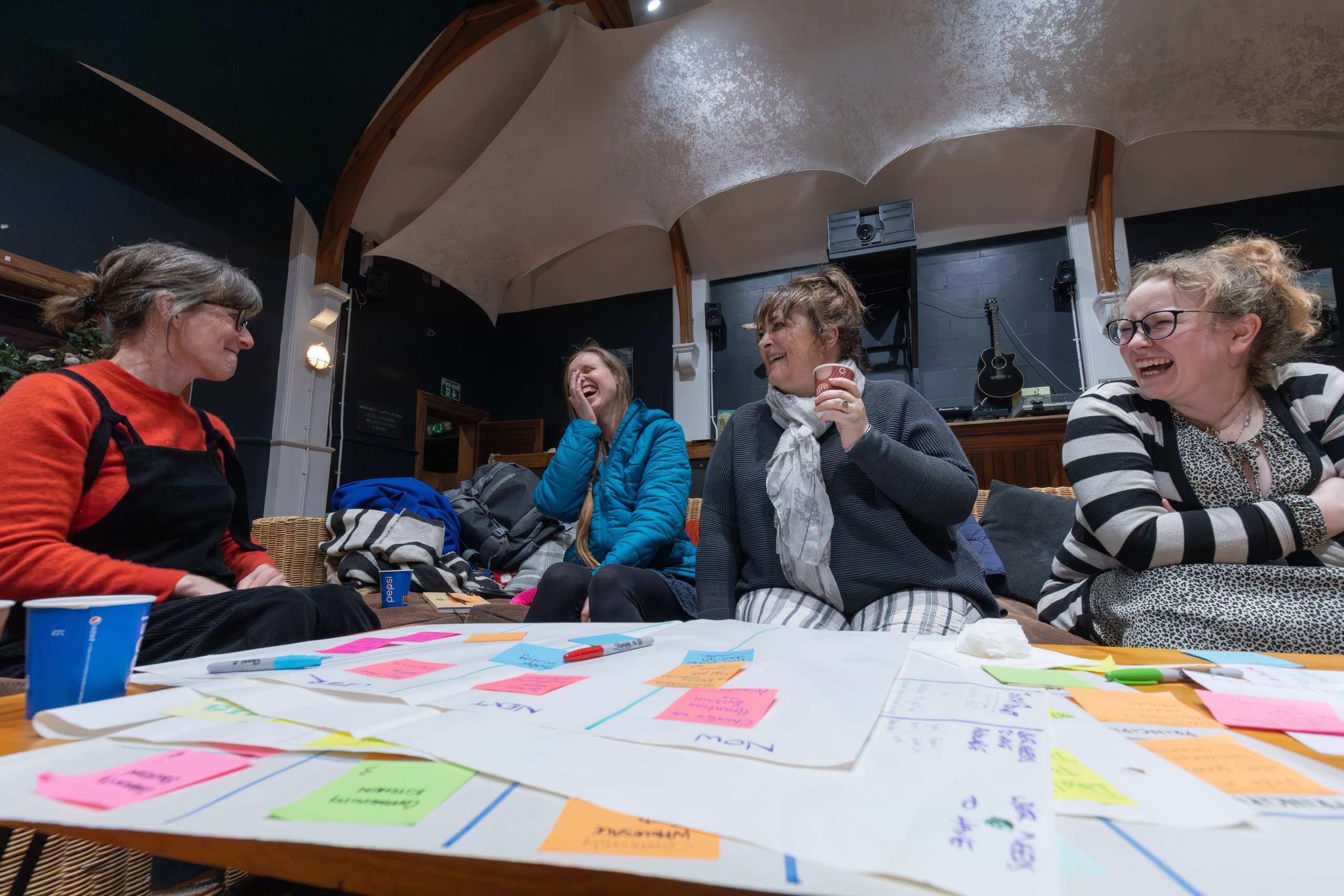
“We don’t need journalism – because this is it.”
Not my words, but the words of Wil Gritten, one of the community co-researchers on Newyddion i Bawb – our project exploring what people and communities actually need from journalism. He was describing what happened when people were given space to come together, make sense of the world collectively, and decide what mattered to them.
There, in eight words, is the part of the premise that’s been missing.
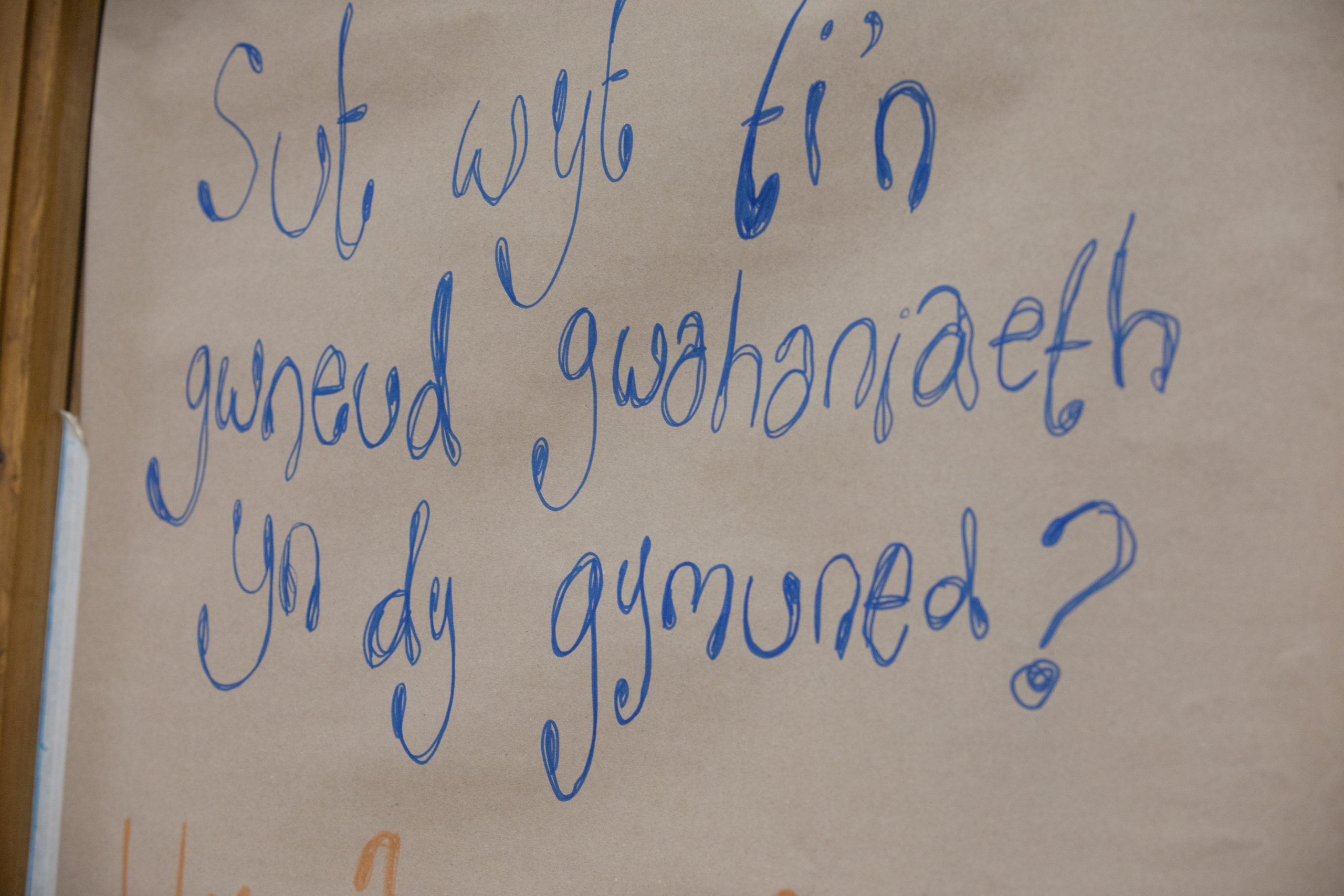
Newyddion i Bawb – News for All in Welsh – started from a simple but radical viewpoint: before telling communities what journalism should do for them, we should ask what they want. Strange that something so obvious should feel so subversive!
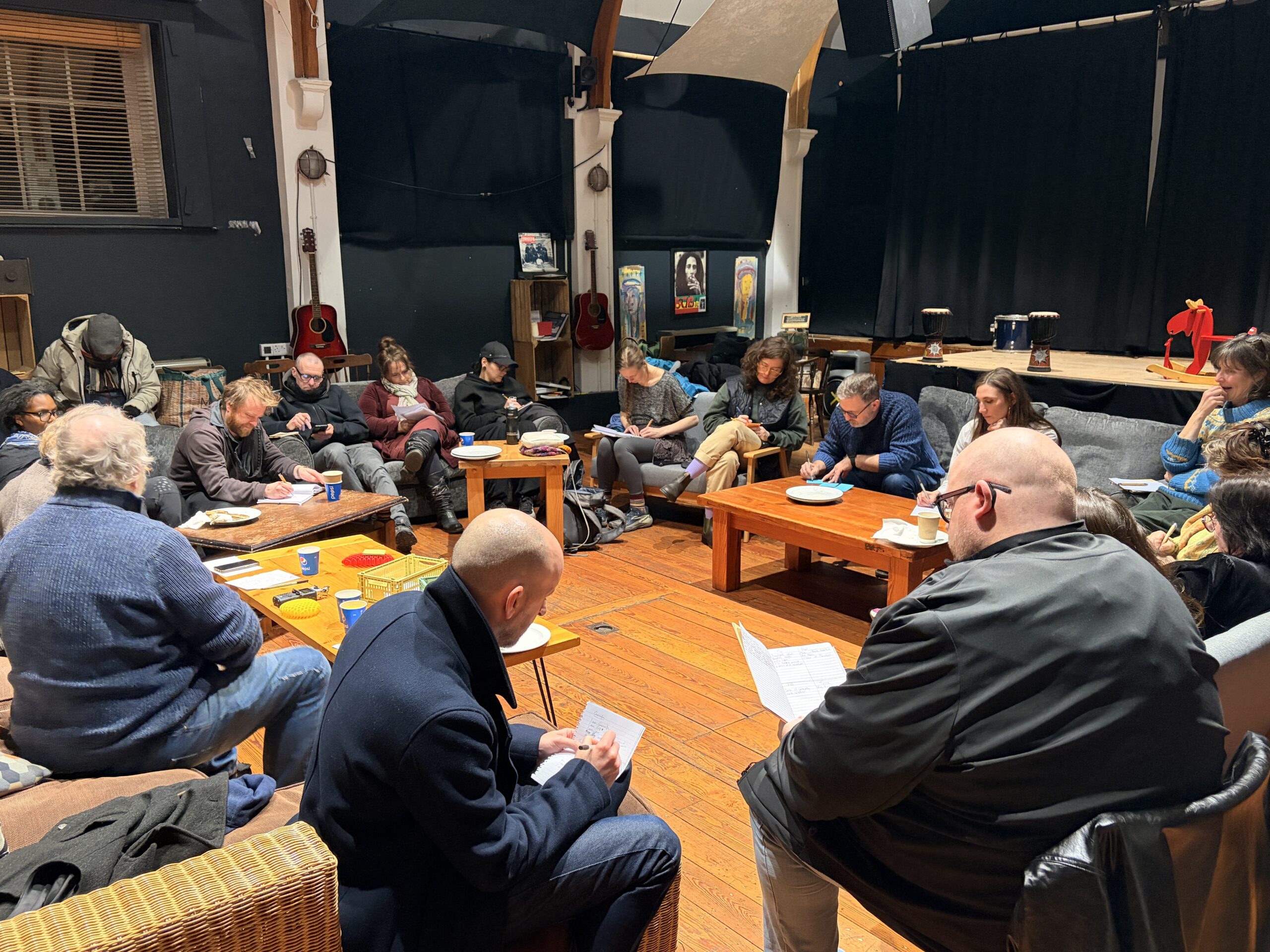
Working with community partners in Blaenau Ffestiniog, north Wales, in collaboration with the Welsh Government, the Welsh language public service broadcaster S4C and supported by the AHRC’s Community Innovation Practitioner Award, we used creative facilitation and dialogue to build something more valuable than simply content: relational trust. We created spaces for collective sensemaking where people could come together, process the world, and develop and use their own agency. These weren’t focus groups or consultations where we simply validated choices that had already been made. They were moments where the community had the power and time to decide for themselves what their future could look like.
Given that space, people didn’t just talk – they started collaborating, making plans, building things together. The space itself became the answer.
Blaenau Ffestiniog sits high in the mountains of Eryri. Rural, remote, largely white, majority Welsh speaking. Newyddion i Bawb was building on the foundations of News for All, our earlier project with a very different community – urban, multi-ethnic, multicultural Cardiff. The demographics couldn’t have been more different. But the findings were strikingly, almost uncannily, the same. It’s clear that there’s a building body of evidence here that transcends community, geography and culture.
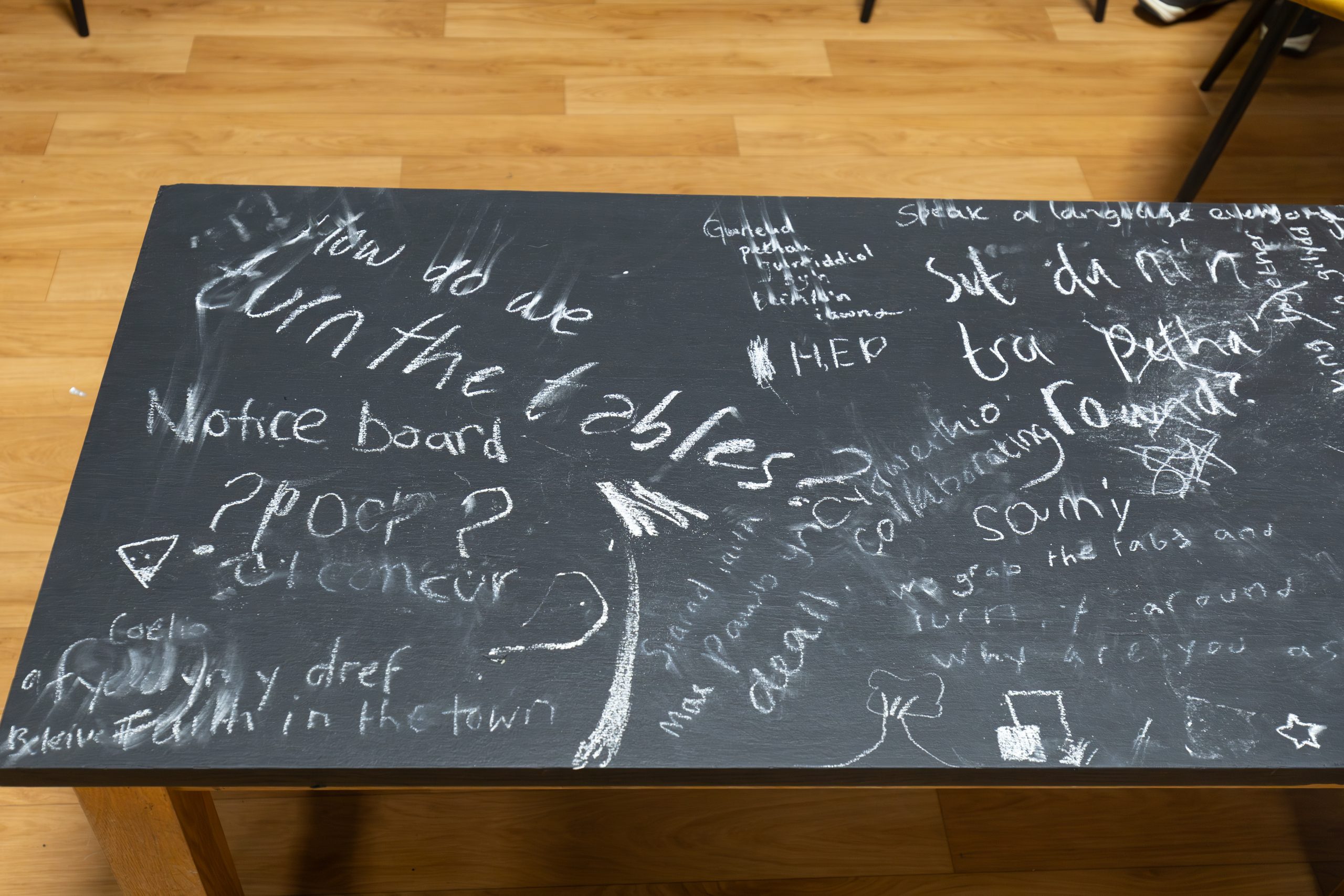
So what did we actually find? What does the missing premise actually tell us?
The first thing that strikes you when you genuinely listen to communities talk about journalism is that the problem isn’t that they have too little information – they have too much. They’re drowning in content – pulled in every direction by an information ecosystem that AI is making faster, noisier and harder to navigate by the day. The conclusion the industry draws – that people need more journalism, better journalism, faster journalism – doesn’t follow. What people are crying out for is a processing layer – spaces and formats that help them make collective sense of the world together. Connection, not content.
The second finding challenges one of the journalism industry’s most comfortable premises: that audiences – particularly marginalised communities – are news-illiterate and need to be educated. The opposite is true. In fact, the communities we work with are forensically sharp about media – often more so than the industry insiders who talk about them.
The reason is simple and sobering: for people whose communities are regularly misrepresented or ignored by mainstream journalism, understanding how media narratives work isn’t an academic exercise – it’s existential. Harmful stories have real consequences for real lives. I know from personal experience that having your life put at risk by those narratives has a funny way of sharpening your critical faculties.
The third finding is perhaps the most practically useful for anyone thinking about what journalism should become. When you ask people what they actually want from journalism – not what they consume, but what they need – the answer is remarkably consistent across very different communities. They want help making good decisions. For themselves, their families, their communities. Not drama, not outrage, not the next breaking story. Practical, trustworthy, usable information that helps them navigate their lives.
Three findings, two very different communities, the same answers. Crucially, none of them support the conclusions most of the industry is currently drawing.
And then there’s AI – where the logical fallacies multiply.
Here, the industry’s argument runs roughly like this: AI is transforming everything, journalism needs to survive, therefore journalism must adopt AI. There’s nothing wrong with that conclusion as far as it goes. But it asks the wrong question. The question isn’t how journalism uses AI. It’s what happens to journalism in a world mediated by AI.
The deeper threat isn’t to how content is produced. It’s to the surfaces of journalism itself. The distribution channels, the search results, the social feeds that have brought journalism to audiences for two decades are being rapidly replaced by AI agents that summarise, mediate and filter content before it ever reaches a human being. The intermediary isn’t a platform any more. It’s an algorithm that decides what you need to know.
In that world, commodity journalism – the breaking news, the press release rewrites, the content produced at scale – has no future. AI will do it faster, cheaper and doesn’t need a pension.
Some newsrooms get this, and are creating surfaces that provide structured, machine readable data for agents, rather than humans. I can see the argument for why that works for niches where the product is unique data or archives, but I’m not sure it works as well for public interest journalism. Even if it does, it’s hard to see a world where more than 2 or 3 big players can make that pay.
Of course we still see the arguments that we’ll somehow force the social media platforms or AI companies to pay for the journalism they use. The moral argument is clear. The practical one, less so. I’m all for hope, but there’s a point at which hope without evidence becomes delusion. Delusion is not a business model.
In fact, most of what journalism has done in the past doesn’t have a business model. A machine can write a 600 word inverted pyramid article better than I can right now. That’s no longer a marketable skill for a human being.
But here’s what AI can’t do. It can’t sit in a community hub in the mountains and listen. It can’t build the relational trust that creates genuine agency. It can’t be present in a way that changes what people are willing to say and what they feel able to do. When you strip away everything AI can replicate, what’s left, what only journalism can provide – is human connection. The act of listening and bearing witness. The creation of spaces where communities can make sense of the world together.
That’s not a romantic argument for journalism’s past. It’s a logical argument for its future. Conclusion follows premise. Given the way technology is reshaping everything in society and culture, the only areas we’ll be able to add meaningful value are where we can bring things that are uniquely human – the things a machine will never be able to do.
The problem is that much of the industry is either unwilling or unable to follow the logic. Unwilling, because the content model is what journalism has always known – it’s how careers are built, how organisations are structured, how success is measured. Unable, because the commercial pressures are so immediate and so severe that looking beyond the current paradigm feels like a luxury. When you’re trying to survive the next six months, a fundamental rethink of what journalism is for can feel impossibly abstract.
That’s also the context in which there’s remarkably little engagement with any of the (many) ethical concerns that we should be talking about. I don’t have a problem with AI, I do have a profound problem with unaccountable private companies having an outsized influence on who gets what information and how. That’s the thing we should really care about, rather than who can be the first to sign up to a deal with those companies.
But maybe that doesn’t matter, because the communities we worked with aren’t waiting for the industry to catch up. They already know what they need. They’ve been telling us, clearly and consistently, for years. The question is whether journalism is finally ready to follow the logic where it leads.
So where does that leave us?
If the findings from Newyddion i Bawb and News for All tell us anything, it’s that the path forward for journalism isn’t a technology problem or a business model problem – at least not primarily. It’s a relationship problem. And relationship problems require a fundamentally different set of tools, skills and values than the ones the industry has traditionally invested in.
The disconnect between what the industry is doing and what it really needs is jarring. Ask yourself how many so-called “audience-centric” strategies, frameworks and consultants you’ve heard about. Hundreds right? Now ask yourself how much of that work is built out of actually speaking to citizens and listening to them. Not so many.
That gap – between claiming to centre audiences and actually speaking to them – is exactly where the logical fallacy lives.
Communications and Media Theory generally divides audiences into two categories – active and passive. The passive model sees people simply absorbing, believing, and being influenced by media messages without questioning them. The active model acknowledges that they’re consciously choosing what to consume, interpreting it critically, and rejecting or challenging the messages they receive. Which model do you think is most relevant today, and which model do you think most news organisations are designed around?
My guess is your answers to those two questions don’t match. That’s the gap I’m talking about.
That means news organisations need to be willing to look beyond the current paradigm – not because it’s a nice thing to do, but because the communities they want to reach are already there, waiting. Not just more content, more platforms, more distribution – but the patient, relational work of building genuine connection between journalism and the communities it claims to serve.
Funders too need to think differently about what they back. Some, like SVDJ in The Netherlands, are already thinking and doing in this space, giving journalists and newsrooms the time and space to develop new muscles, with impressive results. It’s been a privilege to collaborate with them on some of that work.
And it means we need more spaces – physical, digital, institutional – where genuine deep listening can happen. Not consultations. Not focus groups. Not audience metrics. Real connection.
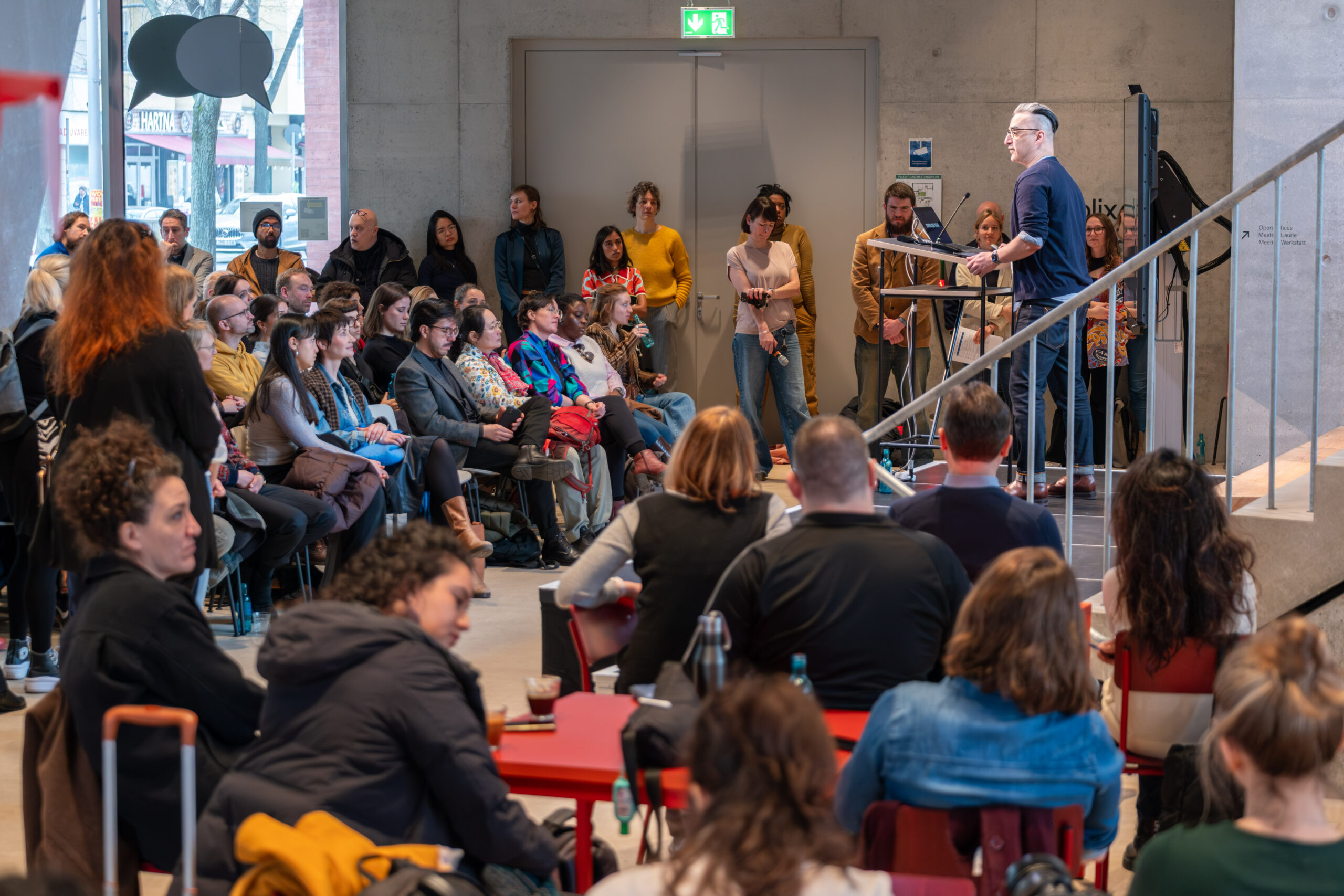
That’s the work I’ve spent years doing – and none of it comes from nowhere. For the past decade, I’ve had the (sometimes unfortunate!) habit of arriving at ideas before they become the dominant conversation: working deeply with communities before “community” became a buzzword, exploring creator journalism with real users before it became a mainstream debate, developing modular and liquid content approaches that are only now being widely discussed.
Each of those threads pointed in the same direction – toward journalism that starts from what people actually need rather than what the industry finds convenient to produce. The community focus isn’t a new idea. It’s where all those threads have been leading.
And it’s the work I’m now helping news organisations and funders think through – what it takes, what it looks like in practice, and what changes when you get it right.
This is just a teaser – you’ll be able to read more about exactly what we built in Blaenau Ffestiniog later in the year, but I’m available right now if you’re interested in figuring out together how you can be ahead of the curve rather than behind it.
I’m opening up a limited number of consultancy spaces to discuss potential working collaborations, with the hope that together we can untangle those logical fallacies and make journalism make sense.
I’d love to hear from you at: shirish@monnowmedia.com
Photos courtesy: Lilia Strojec / Paul Alexander Probst
Created on: June 16, 2026
Has this sparked ideas for you?
Do get in touch if you want to pick up on any of these thoughts.
contact