Storytelling Insight
Keynote: Shaping Tomorrow
Created on: March 17, 2025
I was invited to give the opening address at the Publix and European Press Prize event – Shaping Tomorrow: Collective Efforts for the Future of Journalism on 12th March 2025.
I make no grand claims for the thoughts contained in it, but a couple of people very kindly asked if I would publish the text. This is a lightly edited version of my talk – just to make it comprehensible if you weren’t at the event.
The TL:DR is that the future of journalism can not, should not, indeed must not look like the past. On one hand AI will reshape society in ways that we can’t even comprehend yet, so clinging to storytelling forms that are already outdated simply isn’t going to cut it. On the other, we need to refocus on genuine human connection, providing a service and delivering products that make people’s lives better, easier or more enjoyable.
Journalism has a central role in shaping the civic sphere. First we need to acknowledge that, then we need to lean into it. For me, our purpose is to help make the world a better place. I believe only journalism which does that will have a future.
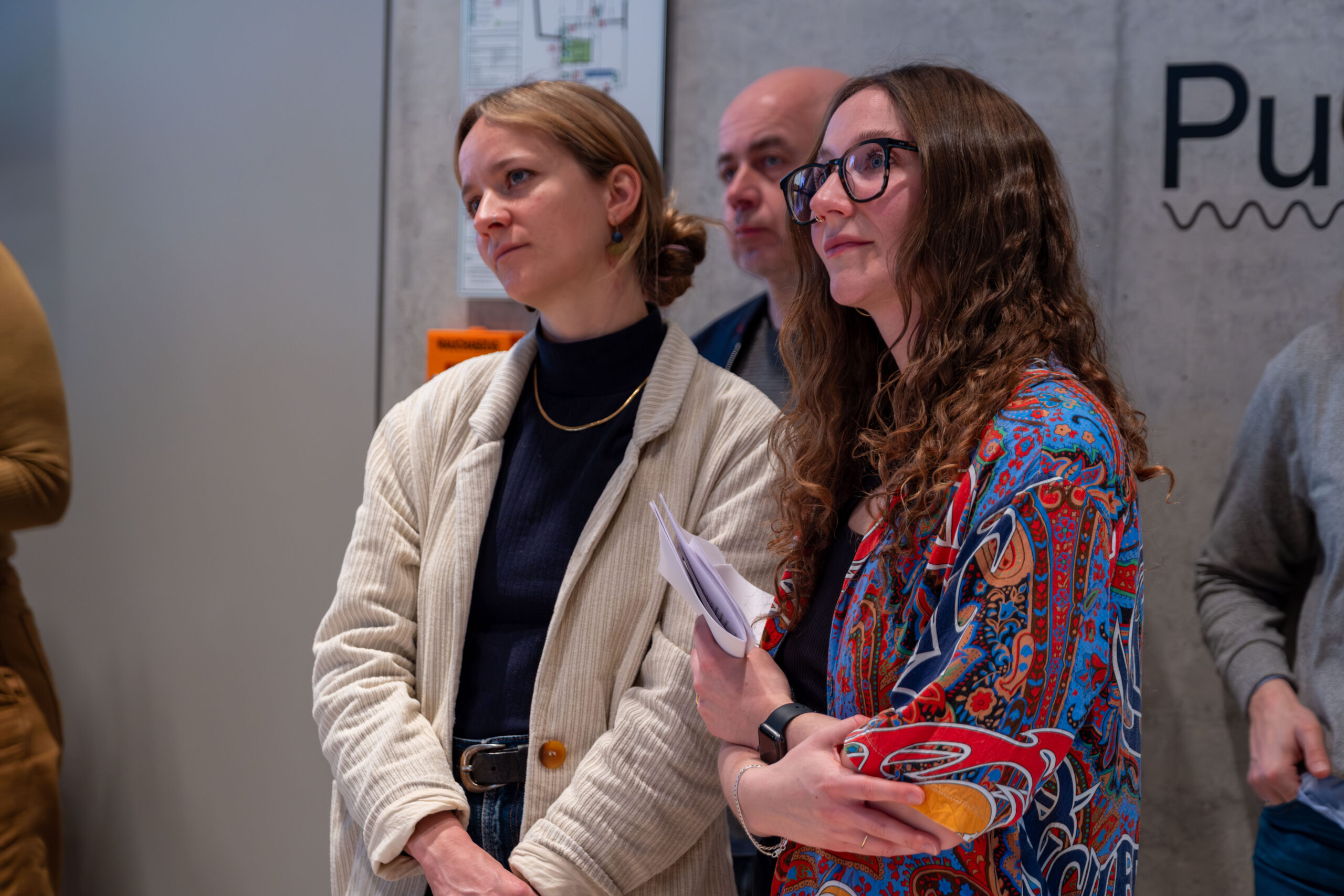
All images: Paul Alexander Probst / Publix / European Press Prize
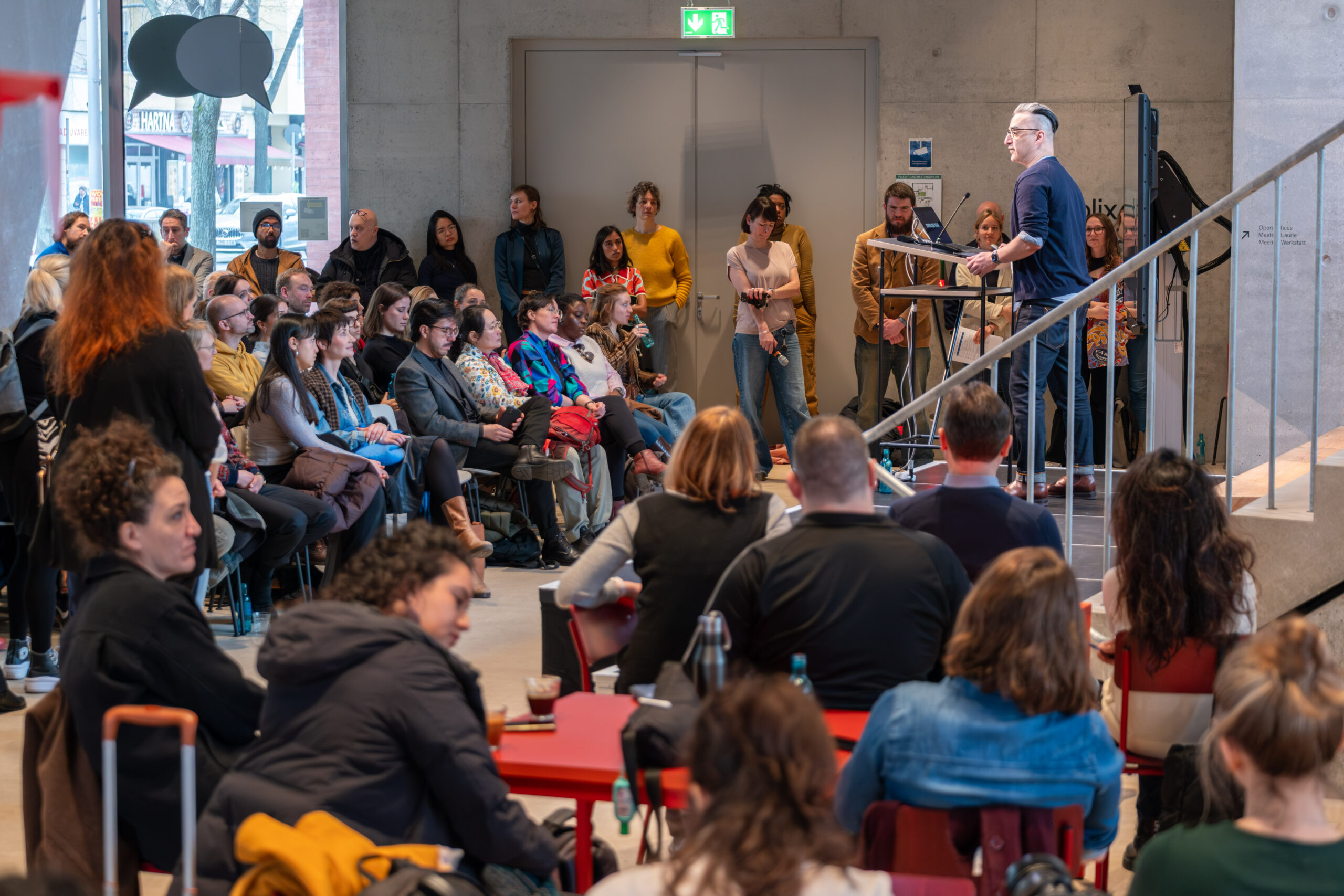
Good morning, guten morgen and if we’re lucky enough to have any other Welsh speakers or learners here – bore da, croeso – welcome and thank you very much to the European Press Prize and Publix for the invitation to be part of these important and timely conversations on the Future of Journalism.
My name’s Shirish Kulkarni and I’m a journalist, researcher and community organiser based in Wales.
I mention where I live, because it’s a small country and that’s important.
For most people, when we went into covid, that whole remote meeting routine of tapping on your microphone, and asking, hello, hello – can anyone see me, can anyone hear me…that was quite a strange and unusual experience right.
Well…I’m a journalist of colour who lives in Wales…
You can see where I’m going with this right?
It feels like I’ve spent my whole life asking that question because, for a long time, I never felt seen or heard.
In a way, I’m glad everyone now gets to understand what that feels like from time to time – because that’s exactly the experience of many of our citizens – the people that we, as journalists, should be serving but have often completely failed to reflect and represent.For me, that question of how we reclaim journalism on behalf of our citizens is at the heart of everything we’ll be discussing today, in the challenging and thought provoking programme that our hosts have put together.
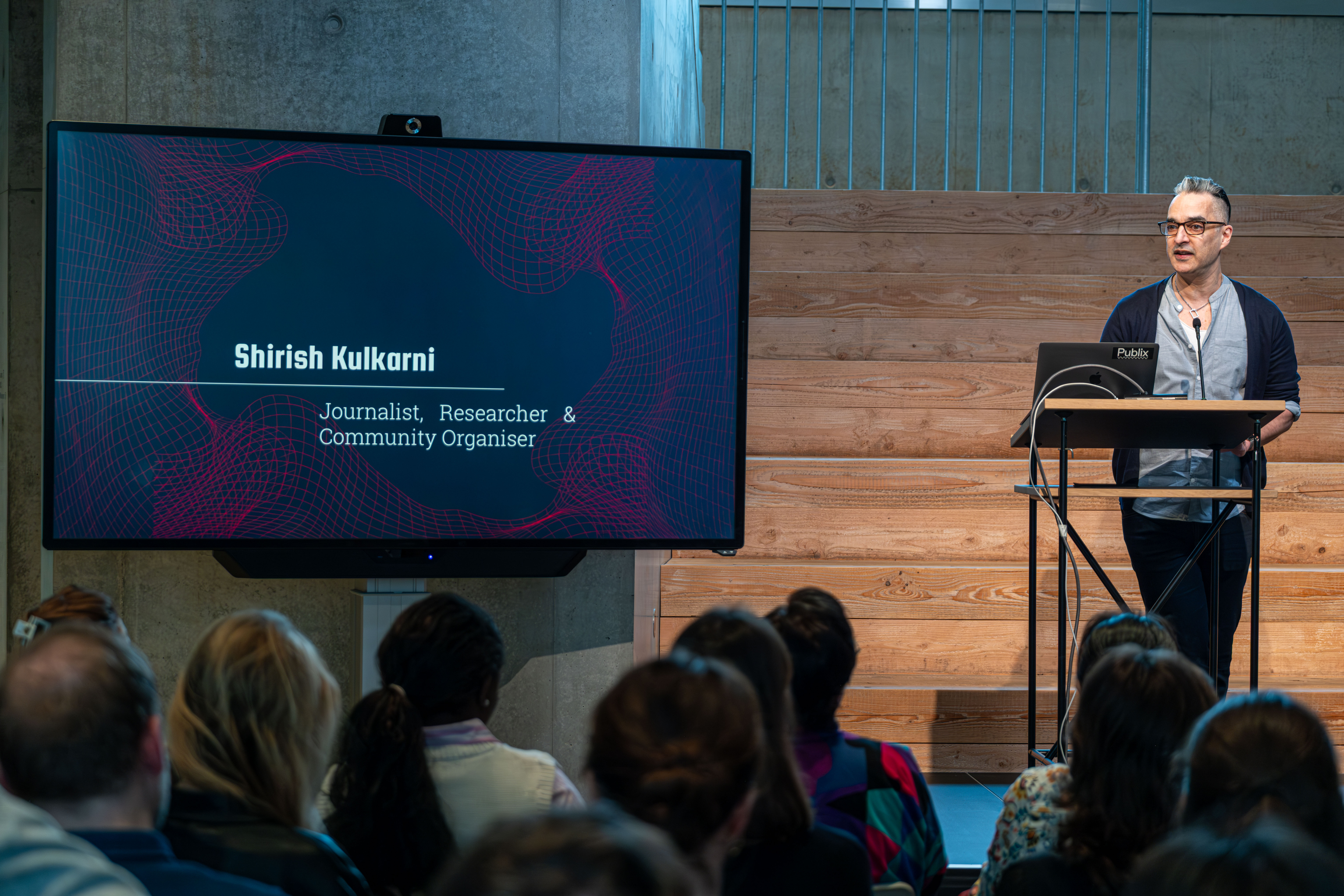
But before I get into that, it is of course a great honour to be asked to give this opening address, but I want to be absolutely clear that I may be the person who has the privilege of standing here today, but only because I’m standing on the shoulders of giants – the incredible pathfinders.
Journalists and thinkers who’ve inspired and informed me over the last few years. People like Jen Brandel, Heather Bryant, Rhiannon Davies, James Lock, Nina Fasciaux, Candice Fortman, Darryl Holliday, Megan Lucero, Cristian Lupsa, Rasmus Kleis Neilsen, jesikah maria ross and many, many others.
I pay credit to all those brilliant folx because the title of this event is Shaping Tomorrow: COLLECTIVE Efforts for the Future of European Journalism, and this can ONLY be a collective effort. We’re going to have to take the ego out of journalism.
None of us are going to be able to deliver the systemic change we need as individuals, or even as individual organisations. We can only do this if we CO-OPERATE for the common good.
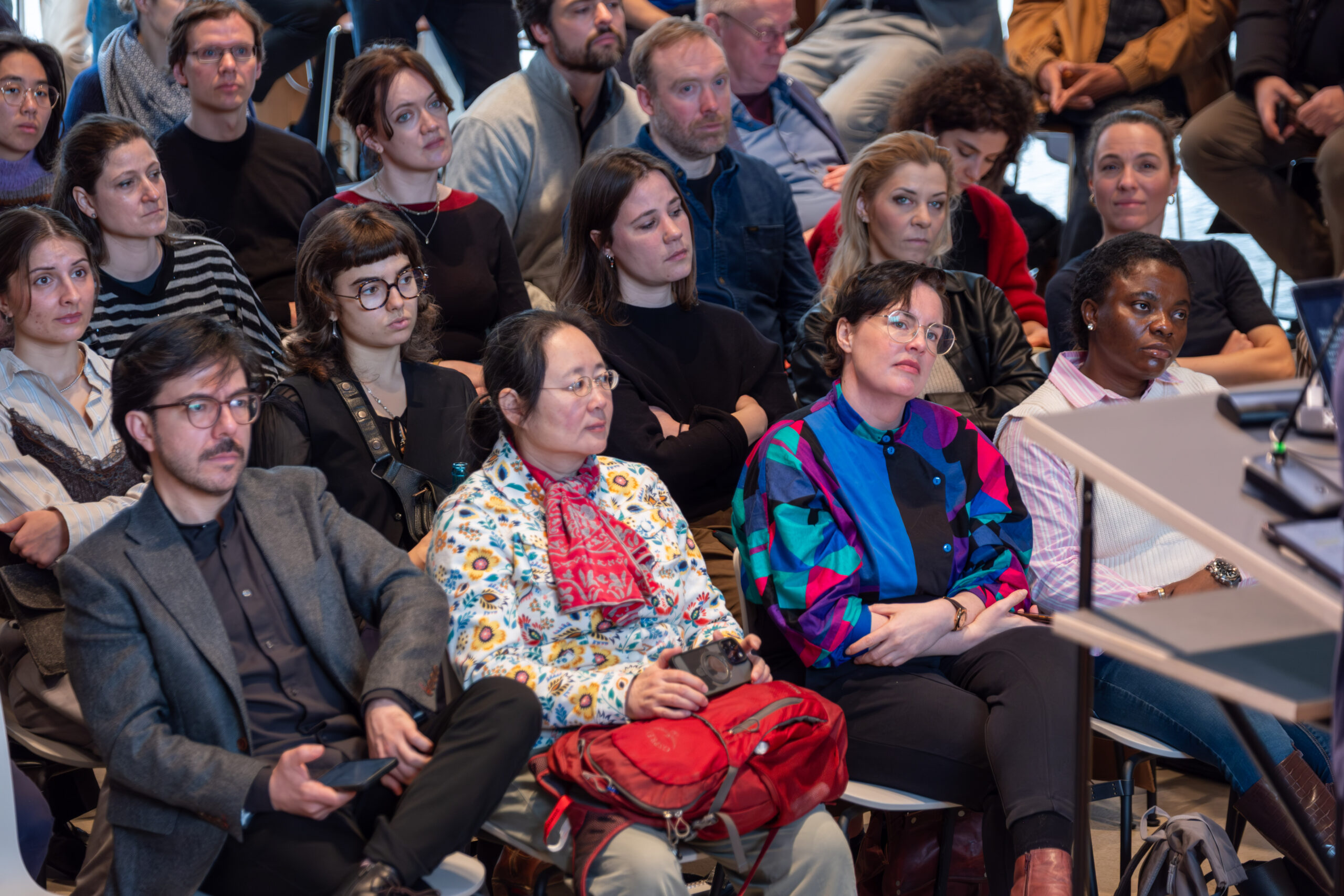
We’re at a moment of reckoning. The traditional structures of journalism—who it serves, how it operates, and what it values—are being questioned in ways that are long overdue.
For too long, we’ve been stuck in a cycle of reactive solutions, tweaking around the edges, while failing to address the core problems. If we really want to build a better future for journalism, we need to be bold enough to face some uncomfortable truths and radical enough to imagine something different.
So, today, I want to offer some provocations—challenges to conventional wisdom. And I also want to point towards some radical, necessary answers to journalism’s biggest questions.
So I’m going to start with some uncomfortable truths. First, journalism has never been truly representative.
Many of its structures have been built to serve and hoard power, not to challenge it. It has often claimed to speak for communities, whilst actually speaking over them. And it has often been shaped by economic models that prioritise profit over public good.
We also need to get real about the role journalism plays for many in society. In some deep listening work I did recently with some of Wales’ most marginalised communities, they told us they regard journalism as oppression.
What they meant by that was that they regard journalism as an arm of the state, as talking at them, rather than to or for them, and as having the same impact on their lives as the police. And not in a good way!
That may sound shocking to many of you, but for them it’s most definitely the reality. The truth is that for many people, large swathes of the journalism landscape have a negative impact on their lives, not a positive one. That’s why we need to get real about journalism’s position in systems of oppression.
We like to tell ourselves that here are the systems of oppression “over here”, and here is journalism “over there”, just reporting on those systems “objectively” and dispassionately.
The reality is of course that journalism is often an intrinsic part of those systems of oppression. We can’t just talk glibly about holding power to account if we don’t acknowledge our own power and account for how it’s used and who for.
So, if we want to fix journalism, we can’t just patch up the system, or try to “save journalism”. We need to dismantle, reimagine and rebuild the structures that have excluded so many people for so long. We need to ask: Who gets to tell stories? Who decides what is newsworthy? Whose voices are heard, and whose are silenced?
Spoiler alert – my radical answer? Stop simply centering the old institutions and start centering communities. Instead of asking how to save newspapers, let’s ask, for example, how to build local, community-driven media ecosystems. We need to explore alternative funding models like public investment and cooperative ownership – that put the good of society ahead of the good of corporate shareholders or tech bros.
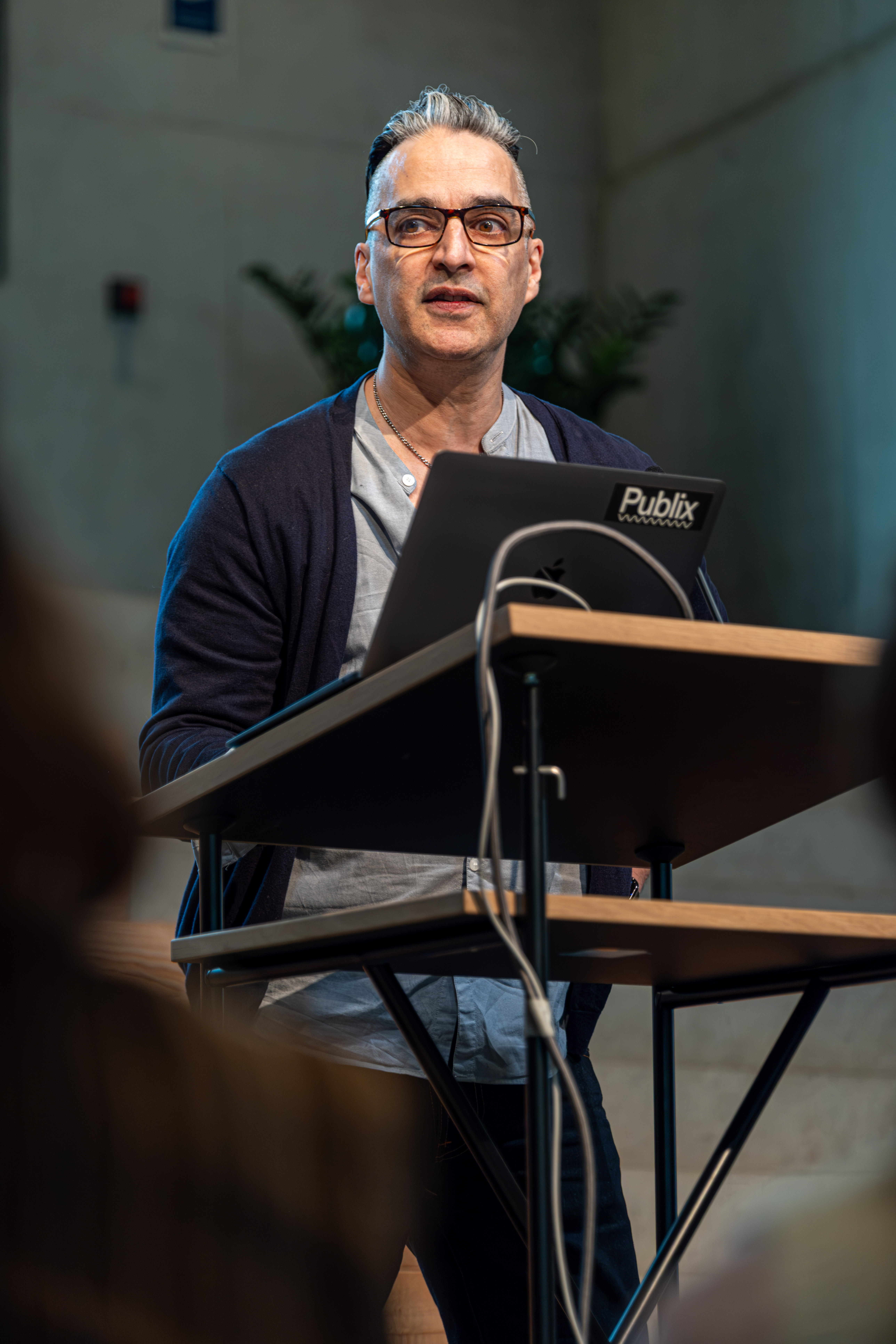
Now, I promised to offer some provocations to set the scene for our discussions today – but before I fulfil my contractual obligations…
I want to be clear – I LOVE being a journalist. It is the very best job in the world.
I consider myself incredibly lucky to have the opportunity to spend time with people, learn with them and from them and be a part of sharing their stories.
I am also filled with admiration for the many brave and principled journalists working in contexts where press freedom can’t be taken for granted, and simply doing their job, in the service of citizens, puts them at risk. They are my heroes.
But I guess the truth is that I love the ideal of journalism, and I love the ideals of journalism, but I don’t always love what journalism has become.
Like many of you here, I’m sure, I became a journalist simply because I wanted to be a part of making the world a better place.
But if you ask most journalists how much “making the world a better place” they get to do in their day to day jobs, most of them would say, “not a lot”. But that’s not their fault, that’s a problem of the system.
But those systemic failures are not acts of nature; they’re failures that have been decades in the making…
That are the result of millions, billions of decisions, large and small, that have brought us to the polycrisis – not just of journalism, but of democracy, and of the planet, that we find ourselves in.
Now for decades, traditional journalism has upheld the idea of “objectivity” as its central tenet. But let’s be clear: objectivity, as it’s been defined in mainstream journalism, has never really existed.
What that myth has effectively done is allow dominant voices—white, male, Western, elite—to set the terms of debate, while dismissing other perspectives as biased or unprofessional. I’ve personally had to deal with those charges throughout my career.
This false neutrality has led to false balance, where harmful or oppressive views are given undue legitimacy in the name of “both sides” reporting.
It has meant that journalism has too often failed to call racism, misogyny, and climate destruction what they are.
And it has created a media landscape that too often excludes and alienates the very people it claims to serve.
Crucially, it has also done its very best to stop us from taking action to make change.
People often talk about “mainstream” or “legacy” media, but these days I prefer to talk about “status quo” journalism, because I think that framing is much more precise, and better captures exactly what the problem is.
There are legacy institutions which aren’t status quo media, and there are new publications which are, so I think we need to be clear exactly what we’re talking about.
The status quo media WANTS to keep things exactly the same, because the way things are suits them just fine – so they are going to keep clinging on to that by their fingernails even as the world changes around them.
But you know who doesn’t want things to stay the same – marginalised people and communities. And guess what, that is MOST people.
Now I want to be clear here and explain that I’m using “marginalised” in the same way as we use “disabled” in the social model of disability. That’s to say that we’re marginalised by society and its systems and structures, not by our own characteristics.
And using that definition, MOST of us are marginalised – because it’s not just people of colour, disabled people, LGBTQ+ people etc. who are marginalised by those systems and structures. Sadly, in 2025, women are still marginalised.
And by definition, marginalised people need systems change, so that we’re NOT marginalised. And guess what, no systems change has ever happened without people taking action.
Even after I explain all that, some of those “status quo” journalists still say to me, “But it’s not our job to inspire action or change” and I have a simple response to them. “Are you saying that you want people to do absolutely nothing with the information you give them? Because that sounds like a shit job.
The radical answer? We need to move beyond objectivity and towards something more honest – transparency and responsibility.
We need journalism that is openly rooted in values—values like justice, equity, and accountability. That doesn’t mean activism in the way traditionalists fear. It means being clear about the choices we make, the perspectives we centre, and the power dynamics we challenge.
Of course the problem with status quo media is that it can’t or won’t change, even in the face of the overwhelming evidence that what they’re doing simply isn’t working.
That’s perhaps best demonstrated in the hand-wringing discussions about so-called “news avoidance” – a term which I reject completely. Because look at it the other way around.
If you ask people, as I often do, “Do you want to understand the world, your place in it and how you might make your life and the lives of your family and community better, easier or more enjoyable?” Everybody says “Yes”, of course they do.
But if you ask them, does “the news” help you do any of that – then largely they say, “no”.
People are not stupid, they care about the world and want to understand it. They just don’t think the status quo media helps them do that.
What they’re rejecting is the stories the status quo media tells, and the way those stories are told.
The thing is, the status quo industry thinks people ARE stupid. It talks patronisingly about how marginalised people are “vulnerable” to misinformation and It tells itself, “The problem is they just don’t understand how incredible our journalism is. What they need is a news literacy programme, so we can EXPLAIN to them just how amazing our journalism is and how they SHOULD be consuming it, because WE. KNOW. BEST.”
But people aren’t stupid. As I mentioned earlier, I’ve been working with some of the most marginalised people and communities in Wales and they completely understand the centralisation of ownership in journalism, the motivations of media barons and the lack of diversity in newsrooms, and that’s exactly WHY they’re choosing not to engage with journalism, because all those factors show up in the stories they’re told and how they’re told.
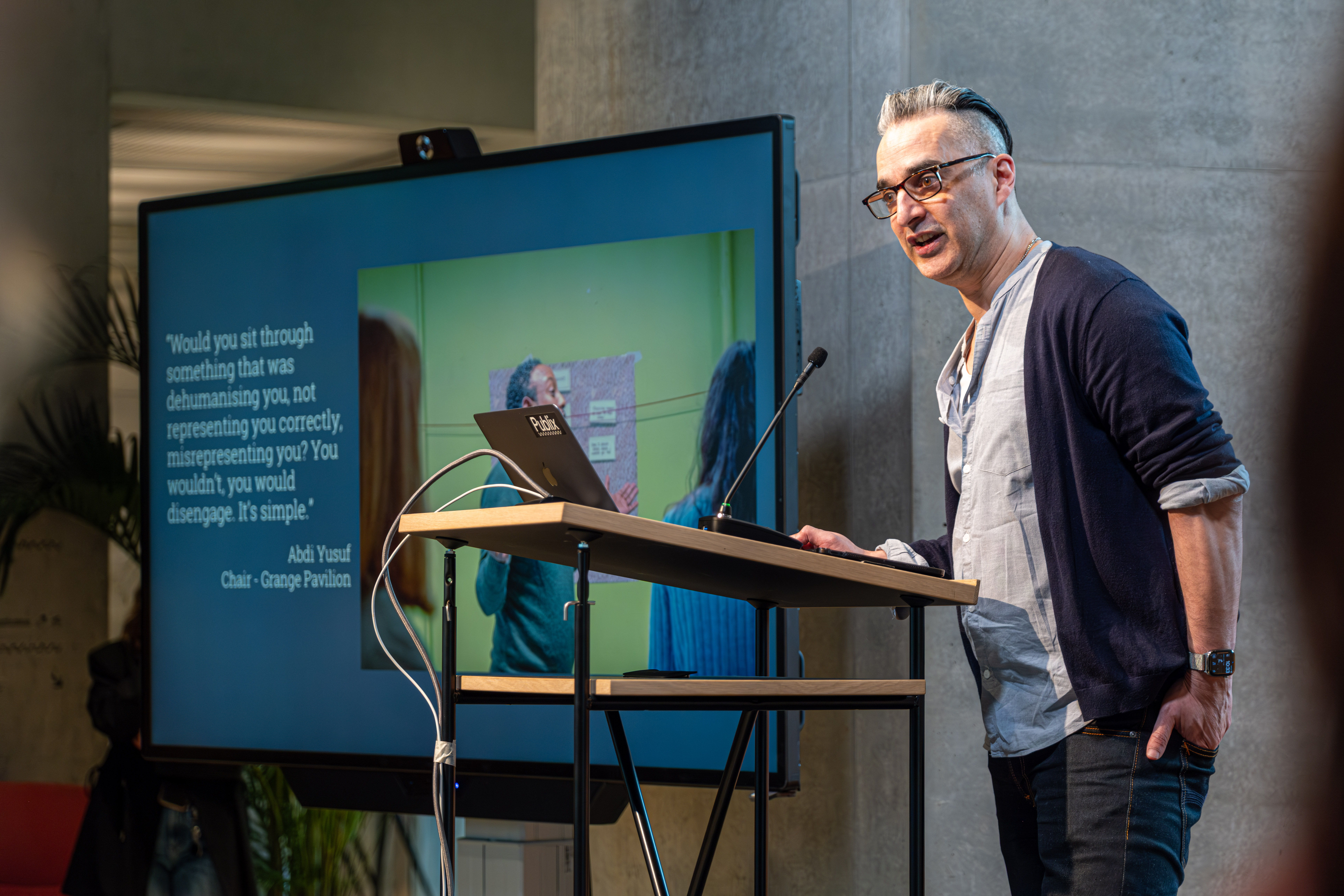
Abdi Yusuf, a community mentor I work with, put it far more accurately and powerfully than I ever could. He says simply, “Would you sit through something that was dehumanising you, not representing you correctly, misrepresenting you? You wouldn’t, you would disengage. It’s simple.”
The way we tell stories matters just as much as the stories we choose to tell. And right now, status quo journalism’s storytelling structures are failing.
News is still dominated by formulaic, outdated narratives—stories that are episodic rather than systemic, conflict-driven rather than solutions-focused, extractive rather than participatory.
We take community experiences, package them into neatly constructed stories, and then move on—without ever giving those communities real power over how their stories are told.
As I often say, journalism has to stop being the only industry where the customer is always wrong. If we don’t trust our audiences, then why should they trust us?
Of course that issue of trust is one of the key challenges facing the industry, and is one often discussed at conferences like this.
But I think we’re sometimes asking the wrong question. I mentioned the brilliant Heather Bryant earlier, and in her thought provoking essay, called simply, “I’m never going to trust your news organisation”, she says, correctly in my opinion, that TRUST was never the right goal.
As she puts it, “I cannot trust that which I cannot hold accountable. And I can never, not really, hold a news organisation accountable. Not in the way that the notion of trust requires.”
That’s because trust is human and can only exist in relationship. I can hold my wife accountable, I can hold my parents accountable (sometimes!) but I can’t hold a news organisation accountable in any meaningful way.
On one hand what that means is, as individual journalists, as reporters, editors, producers we have to create human connections that build relationships – which might increase a person’s “confidence” in our organisation.
We need to be human, and you know what the best way of building trust is?
Doing trustworthy things.
The problem is, I’m not sure journalism has been doing enough trustworthy things over the last few years. It’s clear that needs to change.
As I come to the end of this address, I also want to note an important omission from today’s programme.
Everyone is telling us that the future of journalism is about AI, but there ISN’T a session on AI today, and I think that makes a really powerful and positive statement.
Now I’m not one of those tedious anti-progress sceptics, because I was actually a coach on the JournalismAI programme at the London School of Economics four years ago – so long before it was trendy – and we explored how AI could help us build more inclusive and effective kinds of storytelling.
But the reality is that AI is not going to help us fix any of the fundamental problems with journalism that I’ve outlined this morning.
There is not a single reader, viewer or listener asking for MORE, or CHEAPER content. That’s not going to work for them, and for that reason it’s not even going to work for those status quo news organisations.
Of course we should be working hard to understand the implications of AI, because it is going to TOTALLY reshape our societies, but that is going to drive a need that is barely talked about at journalism conferences – the simple importance of human connection.
What our citizens are telling us is that they want us to connect and share with them – to deliver journalism built on the uniquely human characteristics of connection, collaboration and care – that makes their lives better, easier and more enjoyable. If we lose that, then we lose everything.
So, here’s where we are: The journalism of the past is no longer fit for purpose.
The journalism of the future isn’t going to emerge from tinkering around the edges. It will require boldness, imagination, and a willingness to break things that no longer serve us.
It will require us to centre equity, not just as an aspiration, but as a foundation.
It will require us to see our communities not as audiences, but as partners.
And it will require us to be brave enough to leave behind outdated structures in order to build something truly transformative.
The journalism of tomorrow will, and MUST look, sound and feel very different to the journalism of the past.
But the future isn’t a far away place. The future starts, this second, this minute, this hour and this day. Let’s build it TOGETHER, starting now.
Created on: March 17, 2025
Has this sparked ideas for you?
Do get in touch if you want to pick up on any of these thoughts.
contact